
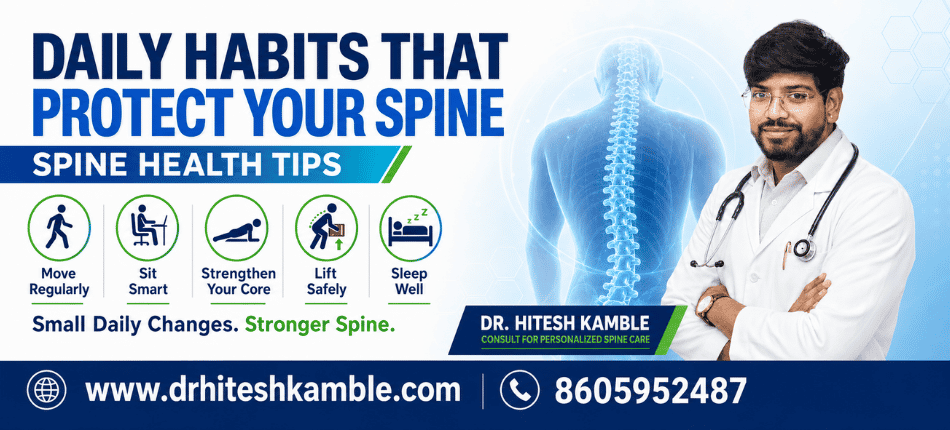
Daily Habits That Protect Your Spine | Spine Health Tips – Dr. Hitesh Kamble
Your spine supports your body, protects the spinal cord, and allows you to bend, walk, sit, lift, and perform everyday activities. Despite its importance, spinal health is often ignored until neck pain, back stiffness, or restricted movement begins to interfere with daily life.
Long periods of sitting, limited physical activity, poor lifting technique, repetitive movements, inadequate sleep, and weak supporting muscles can gradually increase strain on the neck and back. The good news is that small and consistent changes in your daily routine may help protect your spine and reduce the risk of recurring discomfort.
Discover practical spine health tips, including regular movement, safe lifting, core strengthening, better sitting habits, and personalized guidance from Dr. Hitesh Kamble.
1. Keep Moving Throughout the Day
Remaining in one position for several hours can make the muscles around the spine feel stiff and tired. This can happen while sitting at a desk, driving, watching television, or standing at work.
Change position frequently and take short movement breaks. Stand up, walk for a few minutes, gently move your shoulders, or stretch within a comfortable range. There is no single perfect posture that must be maintained all day; regularly varying your position is often more practical and comfortable than trying to sit rigidly.
2. Set Up an Ergonomic Workspace
A poorly arranged workstation may encourage prolonged reaching, bending, or twisting. Adjust your workspace so that frequently used objects remain easy to reach.
Your workstation should ideally include:
- A chair with comfortable lower-back support
- Feet resting flat on the floor or on a footrest
- Knees approximately level with the hips
- A screen near eye level
- Keyboard and mouse positioned close to the body
- Relaxed shoulders
- Forearms comfortably supported
Even with an ergonomic setup, movement breaks remain essential. Furniture alone cannot protect the spine if you sit without changing position for hours.
3. Use Your Phone at a Comfortable Height
Looking down at a phone for extended periods may contribute to neck and upper-back strain. Bring the device closer to eye level whenever practical instead of continuously bending your neck.
Take breaks during long periods of scrolling, messaging, reading, or gaming. Avoid holding the phone between your shoulder and ear, as this creates an uneven position through the neck and upper back. Use earphones or speaker mode when appropriate.
4. Exercise Regularly
Regular physical activity supports muscle strength, joint mobility, circulation, coordination, and overall fitness. Walking, swimming, cycling, yoga, Pilates, and supervised strength training can all contribute to spinal health when performed appropriately.
Exercise should be selected according to your fitness level and medical history. Start gradually, use correct technique, and avoid pushing through sharp or worsening pain. Exercise often helps prevent recurrent back discomfort by strengthening the muscles that support the spine. Mayo Clinic
5. Strengthen Your Core Muscles
The core includes the muscles of the abdomen, lower back, hips, diaphragm, and pelvic region. These muscles work together to support the trunk and control movement.
Exercises such as bridges, bird-dog variations, controlled abdominal bracing, and modified planks may help improve core stability when performed correctly. The ideal exercise depends on your current strength, symptoms, and mobility. People with active pain, osteoporosis, recent surgery, or other medical conditions should obtain professional guidance before starting a new routine.
6. Maintain Hip and Shoulder Mobility
Restricted movement in the hips or shoulders may cause other areas of the body to compensate during daily tasks. Gentle mobility exercises for the hips, upper back, shoulders, and hamstrings may help you move more efficiently.
Stretching should feel controlled and comfortable. Avoid bouncing, forcing a joint beyond its range, or continuing an exercise that produces sharp pain, tingling, or numbness.
7. Lift Objects Safely
Improper lifting can place unnecessary strain on the back, particularly when combined with twisting.
When lifting:
- Move close to the object
- Keep your feet apart for balance
- Bend at your hips and knees
- Hold the load close to your body
- Use your legs to rise
- Avoid twisting while carrying
- Turn by moving your feet
- Ask for assistance with heavy or awkward objects
Mayo Clinic recommends keeping the load close, using the legs, and avoiding twisting during heavy lifting.
8. Carry Bags Correctly
Carrying a heavy bag on one shoulder may create uneven strain through the neck, shoulders, and back. Use a backpack with two padded straps when possible and distribute the contents evenly.
Keep only essential items in the bag and position heavier objects close to the back. If you carry a shoulder bag, switch sides regularly. Children’s school bags should also be checked for unnecessary weight.
9. Pay Attention to Your Sleeping Position
Sleep allows the body to recover, but an uncomfortable position may aggravate existing stiffness. People who sleep on their side may find a pillow between the knees comfortable, while those who sleep on their back may prefer support beneath the knees.
The pillow should support the neck without pushing the head excessively forward or allowing it to drop backward. There is no single mattress suitable for everyone. Comfort, support, body type, and existing symptoms all matter.
10. Maintain a Healthy Body Weight
Excess body weight may increase the physical demands placed on the joints and supporting muscles. Gradual weight management through balanced nutrition and regular activity may help improve mobility and reduce overall strain.
Avoid rapid or extreme diets. Sustainable changes in food portions, activity, sleep, and daily routine are more useful for long-term health.
11. Wear Suitable Footwear
Footwear can influence balance, walking comfort, and movement patterns. Choose shoes that fit properly and suit the activity you are performing.
High heels or poorly fitting shoes may cause discomfort when worn for long periods. However, no special shoe or insert can guarantee prevention of back pain. Persistent symptoms require proper assessment rather than relying only on footwear.
12. Avoid Smoking
Smoking can negatively affect circulation, bone health, and tissue healing. It is also associated with an increased risk of several musculoskeletal problems.
If you smoke, seek professional help to create a realistic cessation plan. Reducing or stopping tobacco use benefits not only spinal health but also the heart, lungs, and overall recovery capacity.
13. Manage Stress
Mental stress can contribute to muscle tension, disturbed sleep, and increased awareness of pain. It may also reduce motivation to remain active.
Helpful stress-management habits include:
- Regular exercise
- Deep breathing
- Adequate sleep
- Short relaxation breaks
- Time outdoors
- Meditation
- Speaking with a mental health professional when needed
Stress management does not mean pain is imaginary. Physical and emotional factors can influence how the nervous system experiences discomfort.
14. Avoid Prolonged Bed Rest
Rest may be helpful immediately after certain injuries, but staying in bed for long periods can lead to stiffness, weakness, and reduced confidence in movement. The NHS advises people with ordinary back pain not to remain in bed for extended periods and notes that activities such as walking, swimming, yoga, and Pilates may help. NHS
Continue safe daily activity within your tolerance unless a healthcare professional advises otherwise.
15. Respond to Pain Early
Do not ignore discomfort that keeps returning, affects sleep, restricts movement, or interferes with work. Early assessment can help identify muscle imbalance, joint restriction, nerve irritation, or other possible causes.
Self-treatment based only on internet advice may not be suitable, especially when symptoms are severe or persistent.
Warning Signs That Require Medical Attention
Seek prompt medical evaluation if back or neck pain occurs with:
- Weakness in an arm or leg
- Persistent numbness or tingling
- Loss of bladder or bowel control
- Numbness around the groin or inner thighs
- Fever or unexplained weight loss
- Severe pain following a fall or accident
- Pain that is constant or worsening
- Difficulty walking or maintaining balance
- History of cancer, osteoporosis, or serious infection
These symptoms require medical assessment and should not be managed only with exercises or home remedies.
How Dr. Hitesh Kamble Can Help
Dr. Hitesh Kamble evaluates posture, mobility, movement patterns, muscle tension, and lifestyle factors that may contribute to recurring neck and back discomfort. Care is planned according to the individual’s symptoms and may include chiropractic techniques, mobility work, soft-tissue care, exercise guidance, ergonomic advice, and habit modification where appropriate.
Spine Health Tips Spine Health Tips Spine Health Tips Spine Health Tips Spine Health Tips Spine Health Tips Spine Health Tips Spine Health Tips Spine Health Tips Spine Health Tips Spine Health Tips Spine Health Tips Spine Health Tips Spine Health Tips
