
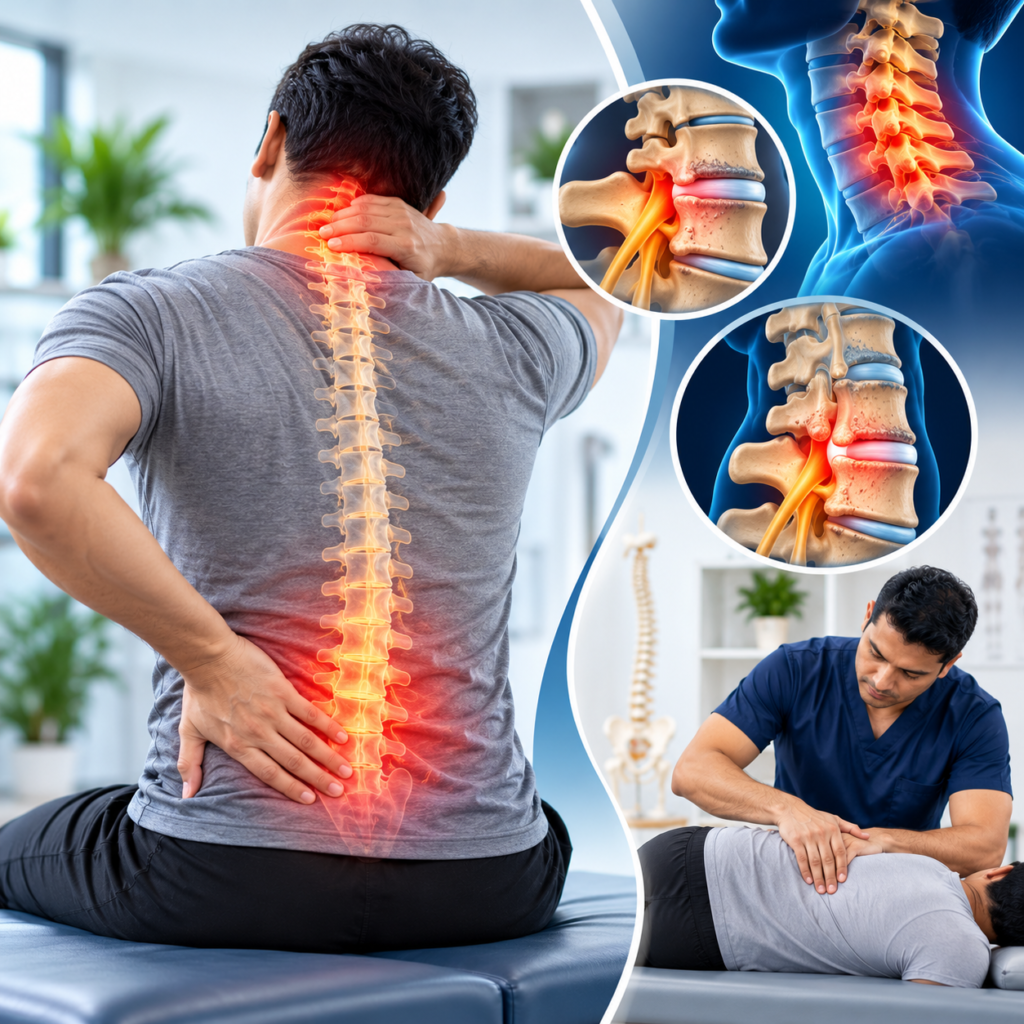
Spondylosis Treatment in Ambernath
Spondylosis is a common degenerative spinal condition that can affect the neck, upper back, and lower back. It develops when the discs, joints, and other structures of the spine undergo gradual changes over time. While these changes are often associated with aging, factors such as previous injuries and repeated physical strain may also contribute to spinal discomfort.
People experiencing spondylosis may notice neck stiffness, lower back pain, reduced flexibility, headaches, or discomfort during everyday activities. In some cases, degenerative spinal changes can irritate or compress nearby nerves, leading to pain, tingling, numbness, or weakness in the arms or legs.
If you are searching for Spondylosis Treatment in Ambernath, Dr. Hitesh Kamble provides consultation for spine-related and musculoskeletal concerns, with a focus on appropriate non-surgical care and improving functional mobility. Spondylosis Treatment in Ambernath Spondylosis Treatment in Ambernath Spondylosis Treatment in Ambernath Spondylosis Treatment in Ambernath Spondylosis Treatment in Ambernath Spondylosis Treatment in Ambernath Spondylosis Treatment in Ambernath
What Is Spondylosis?
Spondylosis refers to age-related degenerative changes affecting the spine, including the intervertebral discs, facet joints, and surrounding bones.
The spine consists of vertebrae separated by discs that help absorb forces and allow movement. Over time, these discs may lose hydration and flexibility, while spinal joints can develop degenerative changes.
These processes may contribute to stiffness, discomfort, or restricted movement. However, many people have degenerative changes visible on X-rays or MRI scans without experiencing significant symptoms.
Spondylosis can affect different regions of the spine, and the symptoms depend on the location and whether nearby nerves or the spinal cord are involved. Spondylosis Treatment in Ambernath Spondylosis Treatment in Ambernath Spondylosis Treatment in Ambernath Spondylosis Treatment in Ambernath Spondylosis Treatment in Ambernath Spondylosis Treatment in Ambernath
Types of Spondylosis
1. Cervical Spondylosis
Cervical spondylosis affects the neck region of the spine. It is commonly associated with degenerative changes in the cervical discs and joints.
Patients may experience neck pain, stiffness, reduced movement, or discomfort extending toward the shoulders.
When cervical nerve roots are affected, symptoms may include tingling, numbness, or weakness in the arms and hands.
In more serious cases, compression of the spinal cord can affect balance, walking, and hand coordination, requiring prompt medical evaluation.
2. Lumbar Spondylosis
Lumbar spondylosis affects the lower back and is common among adults experiencing degenerative spinal changes.
Symptoms may include lower back stiffness, discomfort after prolonged sitting, and difficulty performing certain bending or lifting activities.
Some patients develop radiating leg pain when associated degenerative changes irritate or compress spinal nerves.
Appropriate evaluation helps determine whether the symptoms are caused by degenerative changes, muscle-related pain, or another spinal condition.
3. Thoracic Spondylosis
Thoracic spondylosis affects the middle portion of the spine.
Although degenerative changes may be visible in this region, they are often less symptomatic than changes in the cervical or lumbar spine.
When symptoms occur, patients may experience mid-back stiffness, localized discomfort, or reduced mobility.
Persistent thoracic pain, particularly when accompanied by unexplained systemic symptoms or neurological changes, requires medical evaluation.
Common Symptoms of Spondylosis
Symptoms of spondylosis vary depending on the affected spinal region and the severity of associated nerve involvement.
Neck Pain and Stiffness
Cervical spondylosis may cause discomfort around the neck, particularly after remaining in one position for a prolonged period. Some patients notice stiffness when turning their heads.
Lower Back Pain
Lumbar spondylosis may contribute to lower back discomfort, especially during certain movements or activities.
Reduced Spinal Flexibility
Degenerative changes and associated muscle tension may make bending, turning, or extending the spine uncomfortable.
Shoulder and Arm Discomfort
When cervical nerve roots become irritated, pain may extend toward the shoulder, arm, or hand.
Tingling or Numbness
Nerve compression can sometimes cause tingling, numbness, or altered sensation in the arms or legs.
Muscle Weakness
Significant nerve involvement may affect muscle strength. New or worsening weakness should be evaluated promptly.
Difficulty With Daily Activities
Persistent symptoms can interfere with driving, household tasks, physical work, sleep, and other routine activities.
Important: Difficulty walking, loss of hand coordination, progressive limb weakness, or new bladder or bowel dysfunction can indicate serious neurological involvement and requires urgent medical attention.
What Causes Spondylosis?
Spondylosis develops through several interacting processes.
1. Age-Related Spinal Degeneration
As people age, spinal discs and joints naturally undergo structural changes. These changes may affect the spine’s flexibility and ability to distribute mechanical loads.
2. Intervertebral Disc Degeneration
Spinal discs gradually lose some of their water content and elasticity. Disc degeneration may contribute to changes in spinal movement and load distribution.
3. Bone Spur Formation
Degenerative changes can lead to the formation of osteophytes, commonly called bone spurs.
Bone spurs do not always cause pain, but in some cases they may contribute to narrowing around spinal nerves.
4. Previous Spinal Injuries
Past injuries may contribute to degenerative changes or persistent musculoskeletal symptoms in some individuals.
5. Repetitive Physical Loading
Certain occupations and activities involve repeated lifting, bending, or prolonged physical loading.
These activities may aggravate symptoms or contribute to spinal stress, although they do not necessarily cause spondylosis on their own.
6. Genetic and Individual Factors
Family history, anatomy, age, and individual biological factors may influence the development of degenerative spinal changes.
How Is Spondylosis Diagnosed?
Proper diagnosis is essential before selecting treatment.
Medical History
A healthcare professional may ask about the location, duration, and intensity of pain, previous injuries, daily activities, and neurological symptoms.
Physical Examination
The examination may include assessing spinal movement, posture, muscle strength, reflexes, sensation, and walking ability.
X-Ray Examination
X-rays can identify certain degenerative changes, including reduced disc-space height and bone spurs.
However, X-ray findings do not always explain a patient’s symptoms.
MRI Scan
MRI may be recommended when there is concern about nerve compression, spinal cord involvement, or other significant conditions.
Neurological Assessment
When patients experience numbness, weakness, or coordination difficulties, additional neurological evaluation may be necessary.
Routine imaging is not required for every patient with uncomplicated neck or lower back pain.
Non-Surgical Spondylosis Treatment in Ambernath
Many people with symptomatic spondylosis can manage their condition without surgery.
Treatment generally aims to reduce pain, improve mobility, maintain muscle strength, and support daily functioning.
1. Personalized Spine Assessment
The first step in managing spondylosis is understanding the patient’s symptoms, physical limitations, and medical history.
A personalized assessment may include evaluating spinal movement, muscle function, posture, and factors that aggravate discomfort.
This helps determine whether conservative management is appropriate or whether specialist medical evaluation is necessary.
2. Physiotherapy and Rehabilitation Exercises
Exercise-based rehabilitation can play an important role in managing neck and back discomfort associated with degenerative spinal changes.
A structured program may include gentle mobility exercises, progressive muscle strengthening, and activities designed to improve functional movement.
Exercises should be individualized according to the patient’s symptoms and physical abilities.
3. Chiropractic and Manual Therapy
Selected patients with uncomplicated mechanical neck or back pain may benefit from appropriate manual therapy techniques as part of a broader rehabilitation program.
These techniques may include gentle joint mobilization and soft-tissue approaches.
However, high-velocity spinal manipulation is not appropriate for every patient, particularly when spinal cord compression, significant neurological deficits, instability, or other contraindications are present.
Manual therapy cannot reverse age-related spinal degeneration and should not be presented as a guaranteed cure.
4. Posture and Ergonomic Guidance
Prolonged sitting, repetitive movements, and uncomfortable working positions may aggravate symptoms in some patients.
Practical changes to workstation setup, sitting habits, and movement routines may help reduce discomfort.
Patients are generally encouraged to change positions regularly rather than trying to maintain one rigid posture throughout the day.
5. Muscle Strengthening and Mobility Training
Strengthening the muscles that support the spine may improve movement tolerance and daily function.
Appropriate exercises may target the neck, shoulder girdle, trunk, hips, and other relevant muscle groups.
The exercise plan should progress gradually according to the patient’s condition.
6. Medical Pain Management
A doctor may recommend suitable pain-relieving medication or other treatments when necessary.
Medication decisions depend on symptom severity, medical history, and potential side effects.
Patients should avoid prolonged self-medication without professional advice.
7. Lifestyle Modification
Regular physical activity, adequate sleep, suitable exercise, and maintaining general health can support long-term symptom management.
Patients may also benefit from learning how to modify activities that repeatedly aggravate pain. Spondylosis Treatment in Ambernath Spondylosis Treatment in Ambernath Spondylosis Treatment in Ambernath Spondylosis Treatment in Ambernath Spondylosis Treatment in Ambernath Spondylosis Treatment in Ambernath
Benefits of Non-Surgical Spondylosis Management
Non-surgical management may help suitable patients control symptoms while maintaining independence and everyday function.
Potential benefits include improved spinal mobility, better muscle conditioning, reduced activity-related discomfort, and greater confidence during routine movements.
Exercise and self-management strategies can also help patients develop sustainable habits for managing recurring symptoms.
Treatment results vary, and not every patient responds to the same approach.
Cervical Spondylosis vs Lumbar Spondylosis
Cervical Spondylosis | Lumbar Spondylosis |
|---|---|
Affects the neck region | Affects the lower back |
May cause neck stiffness | May cause lower back stiffness |
Can produce shoulder or arm symptoms | Can produce buttock or leg symptoms |
May affect hand sensation or strength | May affect leg sensation or strength |
Severe spinal cord compression may affect coordination | Severe nerve compression may affect walking or leg function |
The treatment approach depends on the patient’s symptoms, examination findings, and the structures involved.
Can Spondylosis Be Managed Without Surgery?
Yes. Many patients with symptomatic spondylosis can be managed using conservative treatment approaches.
These may include exercise-based rehabilitation, activity modification, patient education, appropriate pain management, and selected manual therapy techniques.
Surgery is generally considered only in specific situations, such as significant spinal cord compression, progressive neurological impairment, or persistent disabling symptoms associated with a surgically treatable condition.
A qualified specialist should assess patients when surgery may be necessary.
Daily Lifestyle Tips for People With Spondylosis
Maintain Regular Movement
Gentle walking and suitable physical activity may help maintain mobility and reduce the effects of prolonged inactivity.
Take Breaks From Sitting
If prolonged sitting increases discomfort, take regular breaks to stand, walk, or change positions.
Follow Appropriate Strengthening Exercises
Exercises targeting relevant muscle groups may help support spinal function and improve movement tolerance.
Avoid Sudden Heavy Loading
Patients experiencing active pain should modify activities that significantly aggravate symptoms and gradually return to normal movement as tolerated.
Improve Sleep Comfort
A comfortable sleeping position and supportive pillow or mattress may help reduce nighttime discomfort, although there is no single ideal sleeping arrangement for everyone.
Seek Assessment for Persistent Symptoms
Pain accompanied by progressive numbness, weakness, walking difficulties, or other neurological changes should not be ignored.
When Should You Consult a Spine Care Professional?
Consider seeking professional evaluation if:
Neck or back pain persists or repeatedly returns.
Stiffness interferes with normal activities.
Pain extends into the arms or legs.
Tingling or numbness continues.
Symptoms affect sleep or work.
Physical movement becomes increasingly difficult.
Urgent medical assessment is necessary for progressive weakness, balance problems, loss of hand coordination, or bladder and bowel disturbances.
Why Choose Dr. Hitesh Kamble for Spondylosis Treatment in Ambernath?
Persistent neck and lower back discomfort can affect work performance, mobility, and quality of life.
Dr. Hitesh Kamble provides consultation for musculoskeletal and spine-related concerns in Ambernath, with an emphasis on evaluating symptoms and considering appropriate non-surgical management options.
A clinical assessment can help patients understand potential contributing factors, discuss suitable conservative care, and identify symptoms requiring further medical investigation.
For information about related manual therapy and musculoskeletal treatment approaches, explore Chiropractic Care in Ambernath.
Frequently Asked Questions About Spondylosis Treatment in Ambernath
1. What is the best treatment for spondylosis?
Treatment depends on the affected spinal region, symptoms, and neurological findings. Exercise-based rehabilitation, appropriate activity modification, and medical pain management are commonly used conservative approaches.
2. Can spondylosis be cured permanently?
Age-related degenerative spinal changes generally cannot be reversed completely. However, many patients can manage their symptoms and maintain good mobility with appropriate care.
3. Is spondylosis a serious condition?
Spondylosis is common and often does not cause serious problems. However, some patients develop nerve or spinal cord compression that requires medical assessment.
4. Can cervical spondylosis cause headaches?
Some patients with cervical spine-related conditions experience headaches, but headaches can have many causes. Persistent or unusual headaches require appropriate evaluation.
Book a Consultation for Spondylosis Treatment in Ambernath
If you are experiencing persistent neck stiffness, lower back pain, or discomfort that affects your daily routine, consider seeking a professional spine assessment.
Adiyogi Multispeciality, Shop No. 5, Harishree Residency, Sarvoday Nagar, Jambul Phata, Ambernath West, Maharashtra.
Website: https://drhiteshkamble.com/
Discuss your symptoms and available non-surgical treatment options to understand the most appropriate approach for your condition.
Conclusion
Spondylosis is a common degenerative spinal condition that may affect the neck, middle back, or lower back. Although many people experience no symptoms, others may develop stiffness, pain, reduced mobility, or nerve-related discomfort.
Appropriate non-surgical management, including exercise, rehabilitation, lifestyle guidance, and selected manual therapy techniques, may help patients improve daily function and manage symptoms.
If you are looking for Spondylosis Treatment in Ambernath, professional evaluation can help identify the underlying cause of discomfort and guide appropriate care.
