
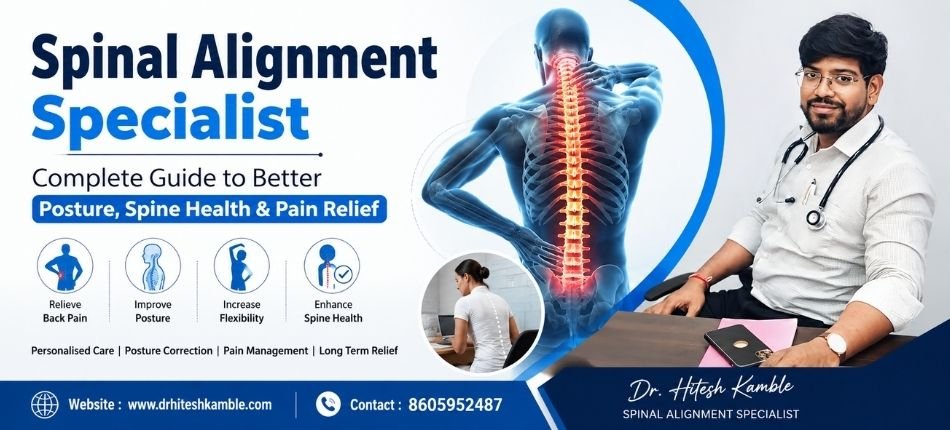
Spinal Alignment Specialist : Complete Guide to Better Posture, Spine Health & Pain Relief – Dr. Hitesh Kamble
A healthy spine is essential for comfortable movement, good posture, balance, and everyday activities. However, long working hours, prolonged sitting, poor posture, excessive mobile phone use, incorrect lifting techniques, and lack of physical activity can place unnecessary stress on the spine and surrounding muscles.
If you frequently experience back pain, neck stiffness, shoulder discomfort, poor posture, or restricted movement, it may be helpful to have your posture and spinal mechanics professionally assessed.
A Spinal Alignment Specialist evaluates the positioning and movement of the spine, posture, muscle balance, and related musculoskeletal concerns. Dr. Hitesh Kamble provides an individualised approach to spinal alignment and posture-related problems, focusing on improving mobility, function, and overall spine health.
What Is Spinal Alignment?
Spinal alignment refers to the positioning of the vertebrae and the natural curves of the spine. A healthy spine is not completely straight when viewed from the side. It has natural curves that help distribute mechanical forces during standing, walking, sitting, bending, and other movements.
When posture or movement patterns place excessive stress on certain areas, muscles and joints may have to work harder to support the body. Over time, this can contribute to stiffness, muscle imbalance, restricted movement, and discomfort.
Maintaining healthy spinal mechanics therefore plays an important role in comfortable and efficient movement.
Who Is a Spinal Alignment Specialist?
A Spinal Alignment Specialist is a healthcare professional who assesses posture, spinal movement, joint mobility, muscle balance, and other factors that may contribute to musculoskeletal discomfort.
Instead of focusing only on where the patient feels pain, a detailed assessment may consider how different parts of the body move together.
Depending on the individual’s condition, an assessment may include:
- Standing and sitting posture
- Spinal mobility
- Neck and back movement
- Muscle flexibility
- Muscle strength and balance
- Shoulder and pelvic positioning
- Movement patterns
- Workstation and lifestyle habits
- Areas of pain, stiffness, or restricted movement
This information helps determine an appropriate management plan according to the patient’s individual needs.
What Can Affect Spinal Alignment and Posture?
There is rarely one single reason behind posture or spinal movement problems. Everyday habits, work demands, physical activity levels, previous injuries, and individual anatomy can all play a role.
1. Prolonged Sitting
People working at computers may spend several hours sitting without adequate movement. Remaining in one position for long periods can contribute to stiffness and muscle fatigue.
2. Poor Working Posture
An incorrectly positioned monitor, chair, laptop, or desk may encourage uncomfortable postures, particularly around the neck, shoulders, and lower back.
3. Excessive Smartphone Use
Frequently looking down at a phone can increase strain on the neck and upper back, especially when the position is maintained for long periods.
4. Muscle Weakness or Imbalance
Muscles around the trunk, hips, shoulders, and back contribute to posture and movement. Weakness or imbalance in these areas may influence how the body moves.
5. Incorrect Lifting Techniques
Repeatedly bending or lifting heavy objects with poor technique can increase mechanical stress on the back.
6. Sedentary Lifestyle
Limited physical activity can contribute to reduced mobility, muscle weakness, and stiffness.
7. Previous Injury
Past injuries may sometimes influence movement patterns, particularly when a person unconsciously changes how they move to avoid discomfort.
Common Signs You May Need a Spinal Alignment Assessment
Occasional stiffness after sitting for a long time is common. However, recurring symptoms or noticeable changes in movement may warrant professional assessment.
Common concerns include:
- Frequent lower or upper back discomfort
- Neck pain or stiffness
- Shoulder tightness
- Reduced flexibility
- Difficulty maintaining comfortable posture
- Muscle tightness
- Restricted neck or back movement
- Discomfort after prolonged sitting
- Posture-related fatigue
- Recurring discomfort during everyday activities
These symptoms can have many different causes. A professional assessment is important rather than assuming that every symptom is caused by spinal alignment.
How Can Poor Posture Affect the Body?
Posture itself is not simply about sitting or standing perfectly straight. The body is designed to move and regularly change positions.
Problems can arise when a person spends excessive time in uncomfortable or repetitive positions, particularly if movement, strength, and recovery are limited.
This may contribute to:
Neck and Shoulder Discomfort
Long periods of looking downward or working at a poorly positioned computer can contribute to muscle fatigue and stiffness around the neck and shoulders.
Back Discomfort
Prolonged sitting, repetitive movements, or inappropriate lifting techniques can increase stress on the muscles and joints of the back.
Muscle Tightness
Maintaining the same position for hours can make certain muscles feel tight or fatigued.
Reduced Mobility
A sedentary lifestyle combined with limited movement may gradually affect flexibility and comfortable range of motion.
Movement Compensation
When one movement becomes uncomfortable, people sometimes change the way they sit, walk, bend, or perform everyday activities. These compensations can influence other areas of the body.
How Does a Spinal Alignment Specialist Assess Your Condition?
The first step is usually a detailed assessment rather than immediately starting treatment.
Medical and Lifestyle History
The specialist may ask about your symptoms, occupation, physical activity, previous injuries, daily routine, and activities that increase or decrease discomfort.
Posture Assessment
Standing and sitting posture may be observed to understand how the head, shoulders, spine, pelvis, and lower body are positioned.
Movement Assessment
Different movements may be checked to identify stiffness, restricted mobility, or movement patterns associated with symptoms.
Muscle Assessment
Muscle flexibility, strength, and balance may also be evaluated when relevant.
Personalised Treatment Planning
Based on the findings, a treatment or rehabilitation plan can be developed according to the patient’s symptoms, functional goals, and overall health.
Spinal Alignment Treatment: What Can It Include?
There is no single treatment suitable for everyone. The appropriate approach depends on the patient’s assessment and underlying problem.
A personalised plan may include:
Posture Education
Understanding comfortable sitting, standing, working, and sleeping positions can help reduce unnecessary strain during everyday activities.
Mobility Exercises
Specific exercises may be recommended to improve movement in areas where stiffness or restricted mobility is identified.
Strengthening Exercises
Strengthening the muscles that support the trunk, hips, back, and shoulders may improve movement control and physical function.
Stretching
Appropriate stretching may help manage muscle tightness and improve flexibility when clinically indicated.
Manual Techniques
Depending on the assessment and professional scope of practice, suitable hands-on techniques may be incorporated as part of a broader treatment programme.
Ergonomic Advice
People who work at a desk may benefit from adjustments to chair height, monitor position, keyboard placement, and regular movement breaks.
Home Exercise Programme
Patients may receive exercises to perform at home to support progress between appointments.
Benefits of Maintaining Healthy Spinal Mechanics
Improving posture and movement habits may offer several functional benefits.
These can include:
- More comfortable movement
- Improved awareness of posture
- Better flexibility and mobility
- Reduced muscle stiffness
- Improved movement efficiency
- Better tolerance for work and everyday activities
- Greater confidence during physical activity
Results vary depending on the underlying condition, lifestyle, consistency with exercises, and individual health factors.
Spinal Alignment and Back Pain
Back pain is one of the most common musculoskeletal complaints, but it can have many causes.
Muscle strain, reduced physical activity, repetitive movements, previous injury, age-related changes, and several medical conditions may contribute to back pain. Posture and movement habits can be part of the overall picture, but they should not automatically be considered the sole cause.
A Spinal Alignment Specialist can assess movement and posture to determine whether these factors may be contributing to your symptoms and whether targeted rehabilitation may be appropriate.
Spinal Alignment and Neck Pain
Modern lifestyles often involve significant screen time. Working on laptops and smartphones for prolonged periods can result in sustained neck positions and reduced movement.
Regular movement breaks, appropriate workstation setup, exercises, and professional assessment when symptoms persist can help manage many mechanical neck complaints.
Persistent neck pain should be assessed properly, particularly when it is accompanied by weakness, numbness, tingling, severe headaches, or other neurological symptoms.
Importance of Ergonomics for Spine Health
Your work environment can have a significant effect on how much time you spend in one position.
For desk-based work:
- Keep the screen at a comfortable viewing height.
- Support your back appropriately.
- Keep frequently used objects within comfortable reach.
- Avoid staying in one position for several hours.
- Take regular movement breaks.
- Change position throughout the day.
There is no single “perfect posture” that must be maintained all day. Regular movement and comfortable variation are important.
Simple Everyday Tips for a Healthier Spine
Healthy spine habits do not need to be complicated.
Try to stay physically active according to your ability, change positions regularly while working, avoid prolonged periods of inactivity, use appropriate lifting techniques, and follow exercises recommended by your healthcare professional.
Good sleep, adequate nutrition, stress management, and regular physical activity can also contribute to overall musculoskeletal health.
When Should You Consult a Spinal Alignment Specialist?
Consider professional assessment if back or neck discomfort keeps returning, stiffness is affecting your daily activities, movement feels restricted, or posture-related discomfort is interfering with work or exercise.
Early assessment can help identify contributing factors and provide appropriate guidance before symptoms become more disruptive.
However, severe pain after an accident, progressive weakness, significant numbness, loss of bladder or bowel control, fever associated with back pain, or other concerning symptoms require prompt medical attention.
Why Choose Dr. Hitesh Kamble for Spinal Alignment Assessment?
Every patient’s symptoms, lifestyle, physical demands, and movement patterns are different. Dr. Hitesh Kamble focuses on evaluating these individual factors before recommending an appropriate approach.
The goal of spinal alignment and posture care is not simply to make the spine “look straight.” Instead, the focus should be on comfortable movement, functional improvement, appropriate strength and mobility, and sustainable habits that support long-term spine health.
Conclusion
Your spine supports almost every movement you make, from sitting and standing to walking, bending, and exercising. Maintaining comfortable movement, adequate strength, mobility, and healthy everyday habits can contribute to long-term spine health.
If you are experiencing persistent back pain, neck stiffness, posture-related discomfort, or restricted movement, consulting a Spinal Alignment Specialist can help you better understand the possible contributing factors and appropriate treatment options.
Spinal Alignment Specialist Spinal Alignment Specialist Spinal Alignment Specialist Spinal Alignment Specialist Spinal Alignment Specialist Spinal Alignment Specialist Spinal Alignment Specialist Spinal Alignment Specialist Spinal Alignment Specialist Spinal Alignment Specialist Spinal Alignment SpecialistSpinal Alignment Specialist
