
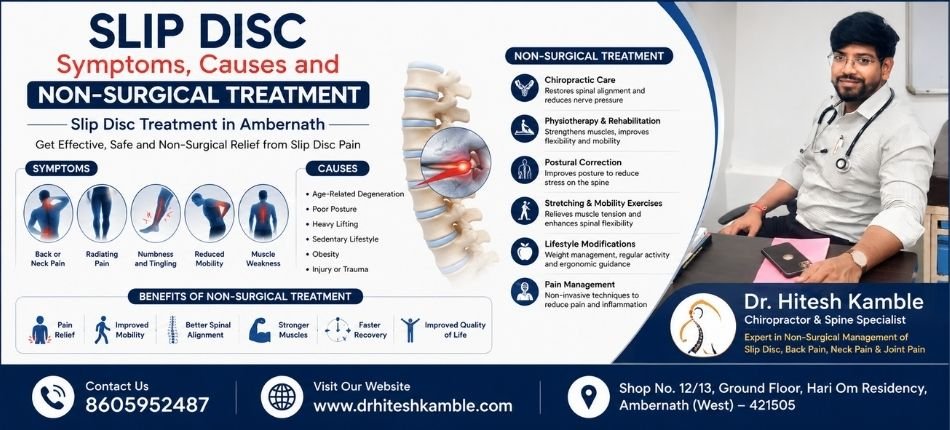
Slip Disc Symptoms, Causes and Non-Surgical Treatment | Slip Disc Treatment in Ambernath – Dr. Hitesh Kamble
A slip disc, also known as a herniated disc or prolapsed disc, is a common spinal condition that can cause significant pain and discomfort. The condition occurs when the soft inner portion of a spinal disc protrudes through its outer layer, putting pressure on nearby nerves. This can result in back pain, neck pain, numbness, and mobility issues. Fortunately, many cases can be effectively managed through conservative and non-surgical approaches. Understanding the symptoms, causes, and treatment options can help individuals seek timely Slip Disc Treatment in Ambernath and prevent further complications.
What is a Slip Disc?
The spine consists of vertebrae separated by soft cushioning discs that act as shock absorbers. When a disc becomes damaged or weakened, its inner material may bulge or herniate outward. This condition can affect any part of the spine but most commonly occurs in the lower back and neck.
Common Symptoms of a Slip Disc
1. Back or Neck Pain
Back or neck pain is often the earliest and most common symptom of a slip disc. The pain occurs when a damaged or herniated disc irritates nearby nerves or places pressure on surrounding tissues. Depending on the location of the affected disc, patients may experience persistent lower back pain or stiffness and discomfort in the neck region. The pain can worsen during activities such as bending, lifting, sitting for long periods, or sudden movements, making daily tasks uncomfortable.
2. Radiating Pain
Radiating pain occurs when a slipped disc compresses a nerve that extends to other parts of the body. For example, a herniated disc in the lower back may cause pain that travels through the buttocks and down the legs, while a cervical slip disc may lead to pain spreading into the shoulders, arms, and hands. This type of pain is often described as sharp, burning, or shooting and can significantly affect mobility and overall comfort.
3. Numbness and Tingling
A slipped disc can interfere with normal nerve function, leading to numbness and tingling sensations in the affected areas. Patients may experience a “pins and needles” feeling in their arms, hands, legs, or feet depending on which nerve is compressed. These sensations may occur occasionally or become persistent over time. Numbness and tingling are important warning signs that indicate nerve involvement and should not be ignored.
4. Reduced Mobility
Reduced mobility is a common consequence of pain, inflammation, and muscle tightness associated with a slip disc. Patients may find it difficult to bend, twist, walk, stand, or perform routine activities without discomfort. Limited flexibility and movement can affect work performance, exercise routines, and overall quality of life. Early treatment can help improve mobility and restore normal function.
5. Muscle Weakness
When a slipped disc places pressure on spinal nerves, it can weaken the muscles controlled by those nerves. Patients may notice reduced strength in their arms, hands, legs, or feet, making it difficult to lift objects, climb stairs, maintain balance, or perform daily tasks. Muscle weakness may gradually worsen if nerve compression continues, highlighting the importance of early evaluation and appropriate treatment to protect nerve function and muscle health.
Causes of Slip Disc
Age-Related Degeneration : As people age, spinal discs naturally lose water content and flexibility, making them more susceptible to damage.
Poor Posture : Improper sitting, standing, and working positions place excessive stress on the spine and increase the risk of disc problems.
Heavy Lifting : Repeated lifting of heavy objects without proper technique can strain spinal discs and contribute to disc herniation.
Sedentary Lifestyle : Weak core and back muscles provide less support to the spine, increasing the likelihood of spinal issues.
Obesity : Excess body weight places additional pressure on the spine, accelerating disc wear and tear.
Injury or Trauma : Accidents, falls, or sudden twisting movements can cause a disc to rupture or herniate.
Non-Surgical Treatment for Slip Disc
Chiropractic Care
Chiropractic treatment focuses on improving spinal alignment, reducing nerve pressure, and restoring mobility through specialized manual techniques.
Physiotherapy and Rehabilitation
Therapeutic exercises help strengthen supporting muscles, improve flexibility, and reduce pain associated with slip disc conditions.
Postural Correction
Improving posture during daily activities can reduce spinal stress and support recovery.
Stretching and Mobility Exercises
Targeted stretching programs can relieve muscle tension and improve spinal flexibility.
Lifestyle Modifications
Maintaining a healthy weight, staying active, and avoiding activities that strain the spine can support long-term spinal health.
Pain Management Techniques
Various non-invasive approaches can help reduce discomfort and improve quality of life during recovery.
Benefits of Early Non-Surgical Treatment
- Reduced pain and discomfort
- Improved mobility and flexibility
- Better spinal alignment
- Enhanced muscle strength
- Reduced risk of further complications
- Improved quality of life
Conclusion
A slip disc can significantly affect daily life, but early diagnosis and appropriate conservative care can help manage symptoms effectively. If you are experiencing back pain, numbness, tingling, or mobility issues, seeking professional Slip Disc Treatment in Ambernath can help you recover and maintain long-term spinal health.
Consult Dr. Hitesh Kamble for personalized, non-surgical management of slip disc and spinal health concerns.
Slip Disc Treatment in Ambernath Slip Disc Treatment in Ambernath Slip Disc Treatment in Ambernath Slip Disc Treatment in Ambernath Slip Disc Treatment in Ambernath Slip Disc Treatment in Ambernath Slip Disc Treatment in Ambernath Slip Disc Treatment in Ambernath
