
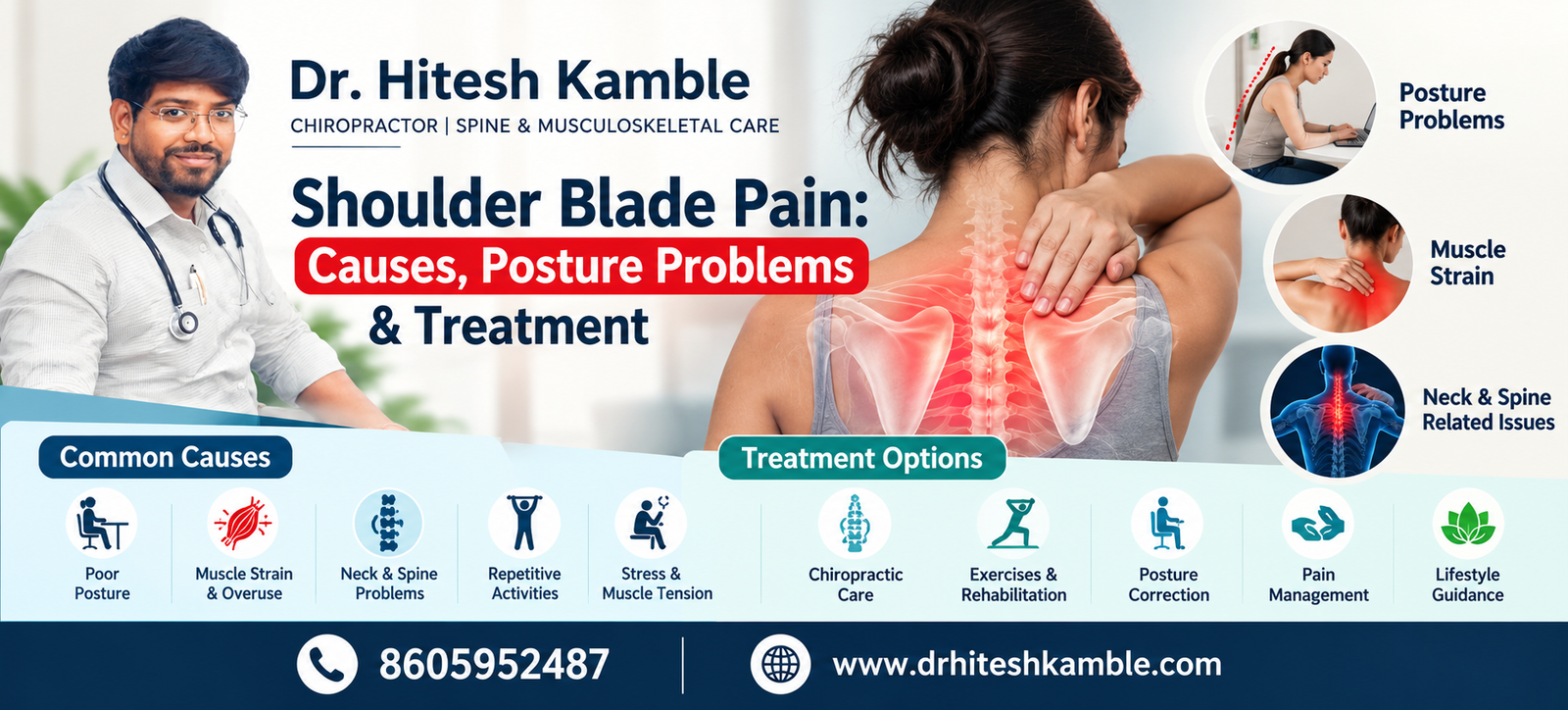
Shoulder Blade Pain: Causes, Posture Problems & Treatment – Dr. Hitesh Kamble
1. Introduction: Understanding Shoulder Blade Pain
Shoulder blade pain is a common musculoskeletal complaint that can affect people of different ages and lifestyles. Whether you spend long hours working at a desk, frequently use your smartphone, lift heavy objects, or perform repetitive physical activities, discomfort around the shoulder blades can interfere with your daily routine.
The shoulder blades, medically known as the scapulae, are triangular bones located on the upper back. They play an important role in shoulder movement, arm stability, and maintaining proper upper-body posture.
Pain in this region may develop due to muscle strain, poor posture, cervical spine problems, joint dysfunction, or repetitive movements. In some cases, shoulder blade discomfort may also be associated with nerve irritation.
For individuals experiencing persistent shoulder blade discomfort, Chiropractic Care in Ambernath at Dr. Hitesh Kamble’s clinic may offer an assessment of posture-related and musculoskeletal concerns, with appropriate conservative treatment options based on individual needs.
Understanding the underlying cause is essential for choosing suitable Shoulder Blade Pain Treatment and managing recurring discomfort.
2. What Is Shoulder Blade Pain?
Shoulder blade pain refers to discomfort experienced around, between, underneath, or along the edges of one or both shoulder blades.
The pain may be mild and temporary or persistent enough to affect everyday activities.
Common symptoms include:
- Dull aching between the shoulder blades.
- Sharp pain during certain arm or neck movements.
- Tightness or stiffness in the upper back.
- Burning sensations around the shoulder region.
- Muscle tenderness near the shoulder blades.
- Discomfort after prolonged sitting or computer work.
- Pain that increases while lifting or reaching overhead.
- Occasionally, tingling or numbness associated with nerve irritation.
Some individuals experience discomfort on only one side, while others develop pain across the upper back.
Because several muscles, nerves, joints, and spinal structures contribute to shoulder movement, identifying the source of pain requires a proper clinical assessment.
3. Common Causes of Shoulder Blade Pain
3.1 Poor Posture
Poor posture is a frequent contributor to muscular discomfort around the shoulder blades.
Sitting with rounded shoulders, a forward head position, or a hunched upper back for extended periods can increase strain on the muscles supporting the neck and shoulder region.
Over time, sustained muscle loading may contribute to stiffness, fatigue, and discomfort.
People who frequently work on laptops or smartphones may be particularly affected.
3.2 Muscle Strain and Overuse
Muscle strain and overuse are common causes of shoulder blade pain, especially among individuals who perform repetitive movements, lift heavy objects, or maintain the same posture for extended periods. Excessive strain on the trapezius, rhomboids, and surrounding muscles can lead to stiffness, tenderness, and discomfort around the shoulder blades. Poor lifting techniques, sudden physical activities, and inadequate muscle recovery may worsen the condition. Proper rest, gentle stretching, and strengthening exercises can help reduce discomfort and improve muscle function. If symptoms persist, professional Shoulder Blade Pain Treatment may help identify the cause and support recovery.
3.3 Cervical Spine Problems
Certain neck conditions can produce pain that spreads toward the shoulder blade.
Examples include cervical spondylosis, cervical disc problems, and cervical nerve root irritation.
Patients may experience neck stiffness, pain radiating toward the shoulder, or numbness and tingling extending into the arm.
A healthcare professional may evaluate the cervical spine when shoulder blade pain occurs alongside these symptoms.
3.4 Thoracic Spine Stiffness
The thoracic spine forms the middle and upper portions of the back.
Restricted movement or irritation of its joints and surrounding tissues may contribute to discomfort between the shoulder blades.
Prolonged sitting, limited physical activity, and repetitive movements can sometimes aggravate symptoms.
3.5 Shoulder Joint Problems
Shoulder conditions may occasionally cause pain that is felt around the scapular region.
Rotator cuff problems, shoulder stiffness, and altered shoulder movement patterns can affect the muscles supporting the shoulder blade.
A detailed examination helps distinguish shoulder-related pain from neck or upper-back problems.
3.6 Scapular Dyskinesis
Scapular dyskinesis refers to altered positioning or movement of the shoulder blade during arm movement.
It may occur alongside shoulder injuries, muscle weakness, fatigue, or movement-control problems.
Some patients experience discomfort, weakness, or difficulty performing overhead activities.
3.7 Stress and Muscle Tension
Emotional stress may contribute to increased muscle tension around the neck, shoulders, and upper back.
Prolonged tension can make existing musculoskeletal discomfort more noticeable.
Relaxation techniques, physical activity, and appropriate ergonomic adjustments may help manage stress-related muscular symptoms.
3.8 Referred Pain From Other Conditions
Not all shoulder blade pain originates from muscles or joints.
Occasionally, conditions involving the heart, lungs, gallbladder, or other internal organs can cause referred pain near the shoulder blades.
Sudden or severe shoulder blade pain, particularly with chest discomfort, shortness of breath, sweating, fainting, or other concerning symptoms, requires urgent medical attention.
4. How Poor Posture Contributes to Shoulder Blade Pain
Modern lifestyles often involve extended periods of sitting, laptop use, and smartphone scrolling.
These activities may encourage a forward head position and rounded shoulders.
When such positions are maintained for long periods without movement breaks, the surrounding muscles may experience increased fatigue and discomfort.
Forward Head Posture
Forward head posture occurs when the head is positioned ahead of the shoulders.
This may increase muscular demand on the neck and upper-back region.
Rounded Shoulders
Rounded shoulders can alter the resting position and movement of the shoulder blades.
Some individuals develop tightness around the chest and fatigue in the muscles supporting the upper back.
Prolonged Desk Work
Remaining in one position for several hours can contribute to muscular stiffness.
Even an ergonomically arranged workstation cannot completely eliminate discomfort if regular movement is neglected.
Incorrect Laptop Position
Using a laptop placed too low may encourage prolonged neck bending and upper-back rounding.
Adjusting screen height and using a separate keyboard when necessary may improve comfort.
Important: There is no single perfect posture that everyone must maintain continuously. Regular movement, comfortable positioning, and appropriate workstation adjustments are often more useful than rigidly holding one posture.
5. Shoulder Blade Pain Due to Long Working Hours
Office employees, students, designers, drivers, and professionals who spend long hours sitting may develop discomfort around the shoulder blades.
Common contributing factors include prolonged sitting, limited movement, unsupported arm positions, and repetitive computer work.
Helpful workplace habits include:
- Positioning the monitor at a comfortable viewing height.
- Keeping the keyboard and mouse within easy reach.
- Supporting the feet and maintaining a comfortable seated position.
- Taking brief movement breaks throughout the day.
- Changing sitting positions regularly.
- Performing gentle neck and shoulder movements.
- Avoiding prolonged phone use with the neck bent downward.
These measures may reduce muscular fatigue and support better working comfort.
6. Shoulder Blade Pain on the Left Side vs. Right Side
Left Shoulder Blade Pain
Left-sided shoulder blade pain may result from muscle strain, neck-related conditions, or shoulder problems.
However, pain involving the left upper back can occasionally occur with heart-related conditions.
Seek emergency medical care if the pain is sudden or accompanied by chest pressure, breathing difficulty, sweating, nausea, or faintness.
Right Shoulder Blade Pain
Right-sided shoulder blade discomfort may develop from muscle strain, shoulder conditions, or upper-back problems.
Certain gallbladder conditions can also cause pain referred toward the right shoulder blade, particularly when accompanied by upper abdominal pain, nausea, or fever.
Pain Between Both Shoulder Blades
Discomfort between the shoulder blades is commonly associated with muscular tension or thoracic spine problems, although other causes are possible.
The location of pain alone cannot reliably identify the underlying condition.
7. When Should You Consult a Healthcare Professional?
You should consult a healthcare professional if shoulder blade pain persists for several days, frequently returns, or interferes with your daily activities. Symptoms such as restricted shoulder movement, neck stiffness, radiating arm pain, tingling, or numbness may indicate an underlying musculoskeletal or nerve-related condition. Pain that worsens despite rest, posture adjustments, or basic self-care should also be evaluated. A professional assessment can help determine the underlying cause and recommend suitable Shoulder Blade Pain Treatment options. Seek immediate medical attention if sudden severe pain occurs with chest discomfort, breathing difficulties, or significant weakness.
8. How Is Shoulder Blade Pain Diagnosed?
Effective Shoulder Blade Pain Treatment begins with identifying the source of discomfort.
A healthcare professional may perform the following assessments.
Medical History
The clinician may ask about the onset, location, severity, and duration of pain.
Work habits, physical activity, previous injuries, and associated symptoms are also important.
Posture and Movement Assessment
The neck, shoulders, and upper back may be examined to identify movement limitations or positions that reproduce symptoms.
Muscle Examination
The clinician may assess muscle tenderness, strength, flexibility, and shoulder blade movement.
Neurological Examination
If nerve involvement is suspected, sensation, muscle strength, and reflexes may be checked.
Imaging or Additional Tests
X-rays, MRI scans, or other investigations are not necessary for every patient.
They may be recommended when symptoms, examination findings, or suspected underlying conditions justify further testing.
9. Shoulder Blade Pain Treatment Options
Treatment depends on whether the discomfort originates from muscles, joints, nerves, the shoulder, or another medical condition.
9.1 Physiotherapy and Rehabilitation Exercises
Physiotherapy may help patients experiencing muscle-related or movement-related shoulder blade pain.
A rehabilitation program may include stretching, strengthening, mobility exercises, and movement retraining.
The aim is to improve functional movement, muscular endurance, and comfort during daily activities.
9.2 Chiropractic Care
For selected patients with musculoskeletal shoulder blade discomfort, chiropractic care may be considered as part of a broader conservative management plan.
Depending on clinical findings, treatment may involve appropriate manual techniques, mobility work, exercise recommendations, and ergonomic guidance.
Manual treatment is not suitable for every condition, and its benefits vary depending on the cause of pain.
Patients with neurological symptoms, significant injuries, or suspected medical conditions should undergo appropriate evaluation before treatment.
9.3 Posture and Ergonomic Guidance
Ergonomic adjustments may reduce repeated strain associated with desk work.
Recommendations may include changing screen position, adjusting chair height, improving workstation layout, and taking regular movement breaks.
9.4 Muscle Strengthening Exercises
Strengthening the muscles supporting the shoulder blades may improve endurance and movement control.
Exercises may target the middle and lower trapezius, serratus anterior, and other shoulder stabilizers.
The exercise program should be selected according to the patient’s symptoms and physical capacity.
9.5 Heat or Cold Therapy
Heat may provide temporary relief for muscular stiffness.
Cold packs may help manage discomfort following some recent minor injuries.
Use a protective cloth and avoid applying extreme temperatures directly to the skin.
9.6 Activity Modification
Temporarily reducing activities that repeatedly aggravate symptoms may allow irritated tissues to recover.
However, prolonged complete inactivity is usually unnecessary for uncomplicated muscular pain.
Gradual return to comfortable movement is generally encouraged.
9.7 Medical Management
When required, a qualified medical professional may recommend medication or further treatment based on the underlying diagnosis.
Persistent nerve-related symptoms or suspected non-musculoskeletal causes may require referral to an appropriate specialist.
10. Exercises That May Help Shoulder Blade Pain
Gentle exercises can sometimes improve mobility and reduce muscle-related discomfort.
The following movements are general examples and may not be suitable for everyone.
Shoulder Blade Squeezes
Sit or stand comfortably and gently draw your shoulder blades toward each other.
Hold briefly, then relax.
Avoid excessive force or shrugging the shoulders.
Shoulder Rolls
Slowly roll the shoulders backward and forward through a comfortable range.
This may help reduce stiffness after prolonged sitting.
Gentle Chest Stretch
Stand near a doorway and position your arms comfortably against the frame.
Move forward slightly until a mild stretch is felt across the chest.
Avoid forcing the movement.
Thoracic Extension
While sitting in a supportive chair, gently extend the upper back within a comfortable range.
Keep the movement controlled and avoid excessive neck extension.
Wall Slides
Stand facing a wall and gently slide your arms upward while maintaining comfortable shoulder movement.
This may help with shoulder mobility and control.
Safety Note: Stop any exercise that causes sharp pain, dizziness, increasing numbness, or worsening symptoms. People with recent injuries, significant nerve symptoms, or unexplained pain should obtain professional guidance before starting exercises.
11. How to Prevent Shoulder Blade Pain
Preventing recurrent discomfort often involves improving daily movement habits rather than relying on a single treatment.
Consider these practical measures:
- Take regular breaks from prolonged sitting.
- Maintain a comfortable workstation arrangement.
- Exercise regularly to support muscular strength and endurance.
- Include gentle upper-back and shoulder mobility exercises.
- Avoid sudden increases in lifting or exercise intensity.
- Use appropriate techniques when handling heavy objects.
- Adjust smartphone and laptop positions to reduce prolonged neck strain.
- Maintain adequate sleep and recovery.
- Seek assessment if pain repeatedly returns.
A consistent routine of movement and strengthening may be beneficial for people who experience recurring muscular discomfort.
12. Shoulder Blade Pain Treatment in Ambernath – Dr. Hitesh Kamble
If you experience recurring shoulder blade pain, neck stiffness, or upper-back discomfort, a professional musculoskeletal assessment can help identify possible contributing factors.
Dr. Hitesh Kamble provides chiropractic care in Ambernath, with a focus on assessing musculoskeletal complaints and supporting patients with appropriate conservative management.
Depending on the clinical assessment, care may include:
- Evaluation of neck and upper-back movement.
- Assessment of posture-related muscular discomfort.
- Guidance on ergonomic improvements.
- Suitable mobility and strengthening recommendations.
- Selected manual therapy techniques when clinically appropriate.
- Advice on managing recurring musculoskeletal symptoms.
Treatment approaches are individualized, and patients with symptoms suggesting nerve injury or other medical conditions may require further investigation or specialist referral.
For more information, visit Dr. Hitesh Kamble’s Chiropractic Care in Ambernath.
Conclusion
Shoulder blade pain can develop due to muscle strain, prolonged sitting, posture-related discomfort, cervical spine conditions, shoulder movement problems, or other medical causes.
Although many cases are musculoskeletal, persistent or unusual symptoms should not be ignored.
Appropriate Shoulder Blade Pain Treatment begins with identifying the underlying cause and may include exercise rehabilitation, ergonomic improvements, selected manual therapy, and medical care when required.
Developing healthy movement habits and seeking timely professional advice can help manage discomfort and support long-term musculoskeletal health.
Looking for Shoulder Blade Pain Treatment in Ambernath?
Visit Dr. Hitesh Kamble to learn more about chiropractic assessment and conservative management options for neck, upper-back, and shoulder-related musculoskeletal discomfort.
Shoulder Blade Pain Treatment Shoulder Blade Pain Treatment Shoulder Blade Pain Treatment Shoulder Blade Pain Treatment Shoulder Blade Pain Treatment Shoulder Blade Pain Treatment Shoulder Blade Pain Treatment Shoulder Blade Pain Treatment Shoulder Blade Pain Treatment Shoulder Blade Pain Treatment Shoulder Blade Pain Treatment Shoulder Blade Pain Treatment Shoulder Blade Pain Treatment Shoulder Blade Pain Treatment Shoulder Blade Pain Treatment Shoulder Blade Pain Treatment Shoulder Blade Pain Treatment
