
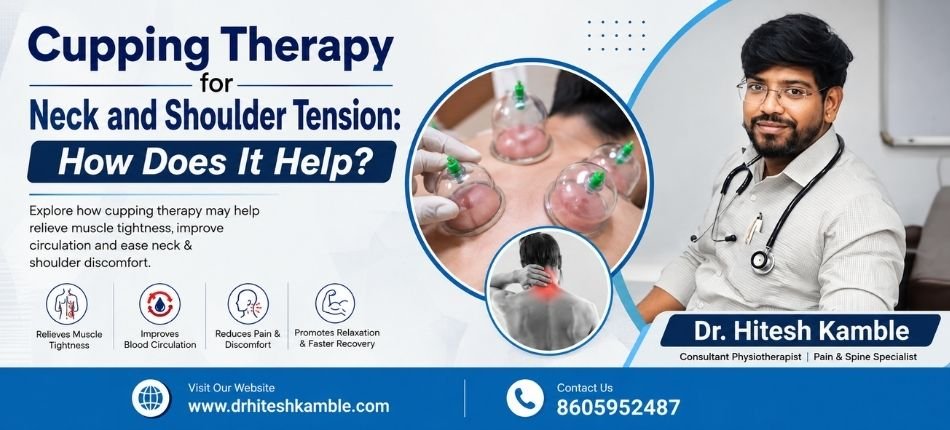
Cupping Therapy for Neck and Shoulder Tension: How Does It Help? – Dr. Hitesh Kamble
Neck and shoulder tension has become increasingly common among people who spend long hours working at a desk, using laptops and smartphones, driving, or performing repetitive activities. Tight muscles around the neck and shoulders may cause stiffness, restricted movement, discomfort, and sometimes headaches.
Along with physiotherapy, stretching, strengthening, and posture correction, cupping therapy for neck and shoulder tension may be considered as a complementary treatment for selected patients. Cupping involves placing specialized cups on the skin to create suction. This may temporarily increase local blood flow and influence muscle and soft-tissue sensation.
In this guide, we discuss how cupping therapy is performed, its potential role in managing neck and shoulder tension, and what patients should know before considering treatment.
What Causes Neck and Shoulder Tension?
Neck and shoulder tension can develop for many reasons. Long periods of sitting, poor workstation ergonomics, repetitive movements, stress, insufficient physical activity, and certain exercise or work patterns may contribute to muscle tightness.
Common contributing factors can include:
- Prolonged computer or laptop use
- Frequent smartphone use
- Poor sitting posture
- Repetitive shoulder movements
- Muscle overuse
- Stress and fatigue
- Inadequate stretching and movement
- Incorrect exercise technique
- Carrying heavy bags
- Long hours of driving
Identifying the underlying reason for recurring tension is important because treatment should address the cause rather than focusing only on temporary symptom relief.
What Is Cupping Therapy?
Cupping therapy is a technique in which specially designed cups are placed over selected areas of the body. Suction is created inside the cups, which gently draws the skin and superficial tissues upward.
Different cupping techniques may be used depending on the treatment approach. In musculoskeletal care, dry cupping may sometimes be incorporated alongside other rehabilitation techniques.
Cupping should be performed by an appropriately trained professional after assessing whether the technique is suitable for the individual.
How May Cupping Therapy Help Neck and Shoulder Tension?
People with neck and shoulder tension often describe their muscles as tight, heavy, or stiff. Cupping may temporarily influence the tissues and sensation in the treated area.
For some individuals, treatment may help them feel more relaxed and comfortable and may temporarily improve movement. However, responses vary between patients, and cupping should not be considered a guaranteed cure for neck or shoulder pain.
It may be most useful when incorporated into a broader treatment program based on the cause of the patient’s symptoms.
Potential Benefits of Cupping Therapy
When clinically appropriate, cupping may be used with the aim of:
- Reducing the sensation of muscular tightness
- Promoting relaxation
- Supporting temporary pain relief
- Improving comfort during movement
- Increasing local circulation
- Complementing stretching and mobility exercises
The benefits and duration of relief can vary. Cupping should therefore be viewed as one possible component of treatment rather than a replacement for assessment, exercise, or rehabilitation.
What Happens During a Cupping Therapy Session?
Before treatment, the practitioner should evaluate your symptoms and relevant medical history. The neck, shoulder, posture, range of motion, and areas of muscular tension may be assessed.
During treatment, cups are placed over selected muscles, commonly around the upper back and shoulder region rather than directly over sensitive anatomical structures. Suction is then applied for an appropriate period according to the technique being used.
Patients commonly feel pulling or pressure beneath the cup. Treatment should be adjusted if it becomes excessively uncomfortable.
Are Cupping Marks Normal?
Circular red, purple, or darker marks can appear after cupping. These marks occur because of the suction applied to the skin and may remain visible for several days.
They are not necessarily an indication of how effective the treatment was.
Some people may also experience temporary tenderness or skin sensitivity following a session.
Is Cupping Therapy Painful?
Cupping generally creates a pulling or tight sensation. The intensity depends on the level of suction, location being treated, and individual sensitivity.
Treatment should not cause intolerable pain. Patients should communicate with their practitioner if the suction feels too strong or uncomfortable.
Who Should Be Careful With Cupping Therapy?
Cupping may not be suitable for everyone. It should generally be avoided over open wounds, active skin infections, burns, or significantly irritated skin.
People with bleeding disorders, those taking certain blood-thinning medications, and individuals with particular medical conditions should discuss their situation with a qualified healthcare professional before treatment.
Always provide your practitioner with an accurate medical history before undergoing cupping.
Simple Ways to Reduce Neck and Shoulder Tension
Alongside professional treatment, everyday habits can play an important role.
Avoid remaining in the same position for long periods. Take regular movement breaks when working at a computer, position your screen appropriately, and avoid constantly bending your neck downward while using your phone.
Regular mobility and strengthening exercises prescribed according to your needs may also help improve the way your neck and shoulders tolerate everyday activities.
When Should You Seek Professional Evaluation?
Occasional muscular tightness may settle with movement and rest. However, consider professional assessment if neck or shoulder symptoms are persistent, repeatedly return, restrict movement, interfere with sleep or daily activities, or follow an injury.
Symptoms such as significant weakness, numbness, tingling, severe or worsening pain, or other unusual symptoms also warrant medical evaluation.
Conclusion
Cupping therapy for neck and shoulder tension may be a useful complementary technique for selected individuals experiencing muscular tightness, stiffness, or discomfort. However, effective management should also consider why the symptoms developed in the first place.
A professional assessment can help determine whether cupping is appropriate and whether exercises, posture correction, strengthening, ergonomic modifications, or other treatment approaches should be included.
For personalized advice, consult Dr. Hitesh Kamble to determine an appropriate treatment and rehabilitation plan for your neck and shoulder symptoms.
Cupping Therapy for Neck and Shoulder Tension Cupping Therapy for Neck and Shoulder Tension Cupping Therapy for Neck and Shoulder Tension Cupping Therapy for Neck and Shoulder Tension Cupping Therapy for Neck and Shoulder Tension Cupping Therapy for Neck and Shoulder Tension Cupping Therapy for Neck and Shoulder Tension Cupping Therapy for Neck and Shoulder Tension Cupping Therapy for Neck and Shoulder Tension Cupping Therapy for Neck and Shoulder Tension Cupping Therapy for Neck and Shoulder Tension
