
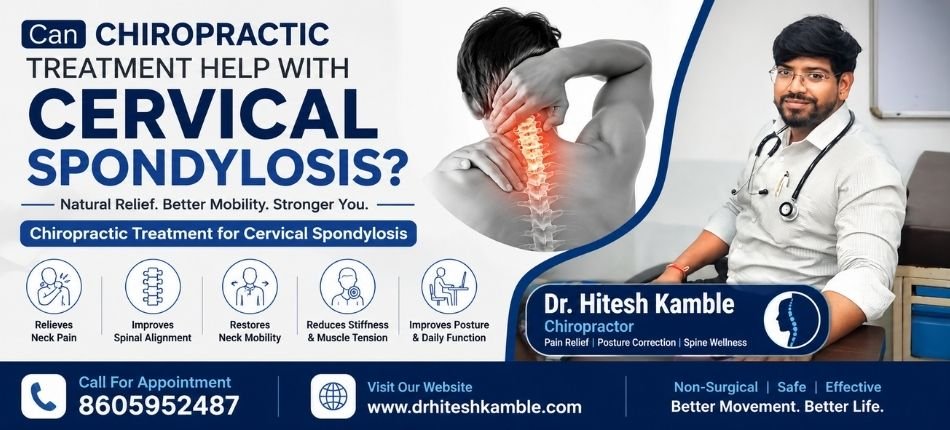
Can Chiropractic Treatment Help with Cervical Spondylosis? | Chiropractic Treatment for Cervical Spondylosis – Dr. Hitesh Kamble
Cervical spondylosis is one of the most common age-related conditions affecting the neck. It occurs due to the gradual wear and tear of the cervical spine, including the vertebrae, discs, and joints. Although it is commonly associated with aging, prolonged desk work, poor posture, and repetitive neck movements have made cervical spondylosis increasingly common among younger adults as well.
The good news is that many people can manage their symptoms effectively without surgery. Chiropractic Treatment for Cervical Spondylosis is a non-invasive approach that focuses on improving spinal function, reducing pain, and restoring neck mobility naturally.
What is Cervical Spondylosis?
Cervical spondylosis, also known as neck arthritis, is a degenerative condition that affects the bones, discs, and joints of the cervical spine. As the spinal discs lose moisture and elasticity with age, they become thinner, leading to stiffness and reduced flexibility. Bone spurs may also develop, causing pressure on nearby nerves.
While mild degeneration may not cause symptoms, advanced cervical spondylosis can interfere with daily activities and significantly affect quality of life.
Common Symptoms of Cervical Spondylosis
The symptoms vary depending on the severity of the condition. Common signs include:
- Persistent neck pain
- Neck stiffness
- Pain radiating to the shoulders and arms
- Tingling or numbness in the hands
- Muscle weakness
- Headaches starting from the neck
- Difficulty turning the neck
- Reduced range of motion
- Dizziness in some cases
Ignoring these symptoms may worsen the condition over time.
What Causes Cervical Spondylosis?
Cervical spondylosis is primarily caused by age-related wear and tear of the cervical spine, but several lifestyle and health factors can accelerate its development. As we age, the spinal discs gradually lose water content and elasticity, leading to reduced cushioning between the vertebrae. This can result in bone spurs, stiff joints, and pressure on nearby nerves. Poor posture, prolonged use of computers and mobile phones, repetitive neck movements, previous neck injuries, obesity, smoking, and a sedentary lifestyle can also contribute to the condition. Identifying and addressing these risk factors early can help slow the progression of cervical spondylosis and reduce its symptoms.
How Chiropractic Treatment Helps Cervical Spondylosis
Chiropractic treatment for cervical spondylosis focuses on restoring proper spinal alignment, improving joint mobility, and relieving pressure on the nerves and surrounding muscles. After a detailed assessment, the chiropractor may use gentle spinal adjustments, joint mobilization techniques, soft tissue therapy, stretching exercises, and posture correction to reduce pain and stiffness. Chiropractic care also helps improve blood circulation, enhance flexibility, and restore the normal range of motion in the neck. Combined with personalized rehabilitation exercises and lifestyle advice, this non-surgical approach can significantly improve daily function and overall spinal health.
Benefits of Chiropractic Treatment for Cervical Spondylosis
Many patients experience significant improvement with conservative chiropractic care.
Some important benefits include:
Natural Pain Relief
Chiropractic care helps reduce pressure on joints and surrounding muscles without relying on long-term pain medication.
Improved Neck Mobility
Proper spinal adjustments help restore movement, making daily activities easier and more comfortable.
Reduced Muscle Tightness
Manual therapy relaxes tight muscles that often contribute to neck pain and stiffness.
Better Posture
Poor posture is a major cause of cervical spondylosis. Chiropractors identify posture-related problems and provide corrective exercises.
Improved Quality of Life
As pain decreases and mobility improves, patients can return to work, exercise, and everyday activities with greater confidence.
Lifestyle Changes That Support Recovery
Adopting healthy lifestyle habits is essential for managing cervical spondylosis and preventing future flare-ups. Maintaining good posture while sitting, standing, and using electronic devices helps reduce unnecessary stress on the neck. Setting up an ergonomic workstation, taking regular breaks during long hours of desk work, and performing neck stretching and strengthening exercises can improve flexibility and muscle support. Sleeping on a supportive pillow, staying physically active, maintaining a healthy weight, avoiding smoking, and managing stress also contribute to better spinal health. These simple lifestyle modifications, when combined with chiropractic treatment, can promote faster recovery and reduce the risk of recurring neck pain.
Who Can Benefit from Chiropractic Care?
Chiropractic treatment may benefit individuals experiencing:
- Chronic neck pain
- Cervical spondylosis
- Cervical stiffness
- Poor posture
- Desk-job-related neck problems
- Mild cervical disc issues
- Headaches related to neck tension
However, every patient should undergo a proper assessment before starting treatment.
When Should You Consult a Chiropractor?
You should consult a chiropractor if you experience persistent neck pain, stiffness, or discomfort that does not improve with rest or home care. Symptoms such as pain radiating to the shoulders or arms, numbness or tingling in the hands, frequent headaches originating from the neck, reduced neck mobility, or muscle weakness may indicate cervical spondylosis or another spinal condition requiring professional evaluation. Early chiropractic assessment can help identify the underlying cause, prevent further degeneration, and provide a personalized, non-surgical treatment plan to relieve pain, improve mobility, and enhance your overall quality of life.
Why Choose Dr. Hitesh Kamble?
Dr. Hitesh Kamble provides patient-focused chiropractic care using safe, evidence-based, and non-surgical techniques for cervical spondylosis and other spine-related conditions. Every treatment plan is tailored to the patient’s needs, focusing on pain relief, improved mobility, posture correction, and long-term spinal health. With a holistic approach and personalized care, Dr. Kamble helps patients regain comfort, restore movement, and improve their overall quality of life.
Conclusion
Cervical spondylosis does not always require surgery. With early diagnosis, proper chiropractic care, and healthy lifestyle changes, many patients experience significant pain relief and improved neck function. If you are suffering from persistent neck pain or stiffness, consulting an experienced chiropractor can help you find a safe and effective path toward recovery.
Chiropractic Treatment for Cervical Spondylosis Chiropractic Treatment for Cervical Spondylosis Chiropractic Treatment for Cervical Spondylosis Chiropractic Treatment for Cervical Spondylosis Chiropractic Treatment for Cervical Spondylosis Chiropractic Treatment for Cervical Spondylosis Chiropractic Treatment for Cervical Spondylosis
