
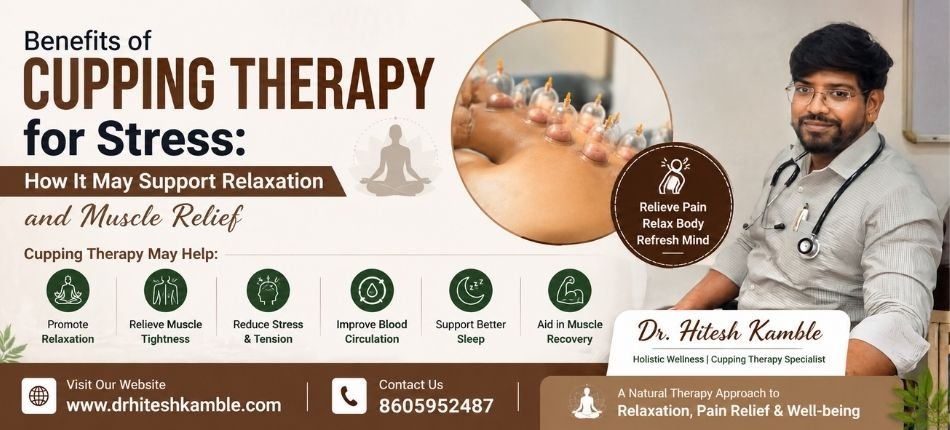
Benefits of Cupping Therapy for Stress: How It May Support Relaxation and Muscle Relief – Dr. Hitesh Kamble
Stress can affect more than your mood. Long working hours, inadequate rest, prolonged screen time, physical fatigue, and demanding routines can contribute to muscle tightness, body aches, headaches, disturbed sleep, and a general feeling of physical tension.
Many people explore complementary therapies alongside healthy lifestyle habits to help them relax and manage stress-related physical discomfort. One such approach is cupping therapy. Understanding the benefits of cupping therapy for stress can help you know what the therapy involves, what it may help with, and when professional guidance is important.
What Is Cupping Therapy?
Cupping therapy is a technique in which specially designed cups are placed on selected areas of the body. Suction is created inside the cups, gently drawing the skin and superficial tissues upward.
Depending on the technique and treatment goal, cups may remain in one position for a certain period or may be moved across an area after appropriate preparation.
Cupping is commonly performed on areas such as the back, shoulders, and other muscles where people frequently experience tightness or discomfort.
How Are Stress and Muscle Tension Connected?
Stress can cause the body to remain in a heightened state of alertness. During stressful periods, people may unknowingly tighten their shoulders, neck, jaw, and back muscles.
When this pattern continues, it can contribute to persistent muscle tightness and discomfort. Someone working at a desk for several hours, for example, may experience both postural strain and stress-related tension around the neck and shoulders.
Managing stress therefore often involves addressing both mental well-being and its physical effects.
Benefits of Cupping Therapy for Stress
Cupping therapy should not be viewed as a cure for stress or anxiety. However, some people use it as a complementary therapy to promote physical relaxation and address muscular discomfort associated with a stressful routine.
Here are some potential benefits.
1. May Promote Physical Relaxation
One of the commonly reported reasons people choose cupping therapy is the feeling of relaxation during or after a session.
The combination of suction, a quiet treatment environment, and attention to tense muscle areas may help some individuals feel physically relaxed.
This relaxation can be particularly appealing to people who frequently experience muscle tightness after stressful days.
2. May Help Relieve Muscle Tightness
Stress-related muscle tension frequently affects the neck, shoulders, upper back, and lower back.
Cupping therapy applies suction to selected tissues and may help some people experience temporary relief from muscular tightness or soreness.
The response varies between individuals, and persistent pain should be properly evaluated rather than assumed to be caused by stress.
3. Can Complement a Stress-Management Routine
Stress management generally works best when it involves multiple healthy habits rather than relying on one therapy.
Cupping may be incorporated into a broader routine that includes regular exercise, adequate sleep, relaxation techniques, stretching, balanced nutrition, and appropriate medical or psychological support when required.
In this context, cupping can be considered a complementary wellness approach rather than a replacement for established stress-management methods.
4. May Help With Neck and Shoulder Discomfort
The neck and shoulders are common areas where people experience physical tension.
Long hours on laptops and smartphones, poor posture, repetitive activities, and emotional stress may all contribute to discomfort in these areas.
When clinically appropriate, cupping may be used as part of a broader approach to managing muscular tightness around the neck, shoulders, and upper back.
5. May Support Recovery From Physical Fatigue
A demanding routine can leave the body feeling tired and stiff, particularly when work involves repetitive physical activity, long periods of sitting, or intense exercise.
Some individuals use cupping therapy as part of their recovery or wellness routine to address muscle soreness and physical fatigue.
However, unexplained or persistent fatigue should be discussed with a healthcare professional because it may have causes unrelated to muscle tension.
6. Provides Dedicated Time for Relaxation
One overlooked aspect of wellness therapies is that they create dedicated time away from work, screens, and everyday responsibilities.
A professionally conducted cupping session can provide a structured period in which an individual can rest and focus on physical relaxation.
While this alone does not treat the underlying causes of chronic stress, incorporating intentional relaxation into a healthy routine may support overall well-being.
Cupping Therapy for Stress-Related Muscle Tension
People under prolonged stress may notice that their shoulders remain elevated or that their neck and back feel constantly tight.
Cupping may be considered for muscular discomfort in these areas after appropriate assessment.
The practitioner should first understand the location of the discomfort, its duration, severity, and whether any other symptoms are present.
This is important because not every type of neck, shoulder, or back pain is caused by stress.
What Happens During a Cupping Therapy Session?
Before treatment, the practitioner may discuss your symptoms, medical history, medications, previous injuries, and treatment goals.
The skin and treatment area are then assessed before the cups are applied.
During dry cupping, suction is created inside the cups and they remain on the skin for a controlled period. Patients commonly feel pulling or tightness under the cups.
After the cups are removed, temporary circular marks may appear on the skin. These marks are related to the suction applied to superficial tissues and typically fade with time.
Does Cupping Hurt?
Cupping generally creates a pulling or pressure sensation rather than the feeling associated with an injection or incision. However, the experience varies depending on suction strength, treatment location, individual sensitivity, and technique.
Some people may experience temporary tenderness or skin sensitivity after treatment.
If the procedure feels excessively painful, the practitioner should be informed immediately.
How Long Do Cupping Marks Last?
Circular discoloration after cupping is common. The appearance and duration vary depending on the individual’s skin, suction intensity, and treatment duration.
Marks may remain visible for several days in some people.
Cupping marks should not automatically be interpreted as toxins leaving the body. They are primarily a local response to suction and pressure on the tissues.
How Many Sessions Are Required?
There is no standard number of cupping sessions for stress-related muscle tension.
Frequency depends on factors such as symptoms, response to treatment, general health, and the practitioner’s assessment.
Some people may choose occasional sessions as part of a wellness routine, while others may require a different treatment approach if symptoms persist.
Is Cupping Therapy Safe for Everyone?
Cupping is not appropriate for everyone or every area of the body.
Professional advice is particularly important for people with certain skin conditions, bleeding disorders, problems with wound healing, or those taking medications that affect bleeding or clotting.
Cupping should generally not be performed directly over open wounds, infected skin, or areas where treatment may be medically inappropriate.
Always inform the practitioner about existing health conditions and medications before treatment.
Cupping Therapy vs Massage for Stress
Both therapies may be used for relaxation and muscular discomfort, but their techniques differ.
Massage primarily involves pressure, kneading, and movement applied to the muscles and soft tissues. Cupping uses negative pressure or suction to lift superficial tissues.
Some individuals prefer one technique, while others may use different therapies depending on their needs and professional recommendations.
Neither should replace medical evaluation when symptoms are persistent, severe, or unexplained.
Healthy Habits to Combine With Cupping Therapy
To manage everyday stress more effectively, cupping therapy can be combined with healthy habits such as:
- Regular physical activity
- Stretching
- Adequate sleep
- Regular breaks from prolonged sitting
- Relaxation and breathing exercises
- Maintaining good posture
- Balanced meals and adequate hydration
- Reducing unnecessary screen time
- Seeking professional mental-health support when needed
These habits address different aspects of stress and overall well-being.
When Should Stress Symptoms Be Professionally Evaluated?
Occasional stress is common. However, stress that persistently affects sleep, concentration, relationships, work, or daily functioning deserves professional attention.
Similarly, ongoing chest discomfort, unexplained severe pain, persistent headaches, weakness, or other concerning physical symptoms should not simply be attributed to stress.
Cupping is a complementary therapy and should not delay appropriate medical or mental-health care.
Consult Dr. Hitesh Kamble About Cupping Therapy
If you are experiencing muscle tightness, physical fatigue, or body discomfort associated with a demanding lifestyle, professional assessment can help determine whether cupping therapy may be appropriate as part of your care plan.
Dr. Hitesh Kamble can assess your symptoms and advise whether cupping or another therapeutic approach may be suitable based on your individual needs.
Conclusion
The potential benefits of cupping therapy for stress mainly relate to physical relaxation and management of muscular tension and discomfort. Some people find cupping helpful as part of a broader wellness and recovery routine, particularly when stress contributes to neck, shoulder, or back tightness.
However, cupping should be viewed as a complementary approach rather than a cure for chronic stress, anxiety, or an underlying medical condition.
A balanced approach combining appropriate professional care, exercise, sleep, relaxation techniques, and healthy daily habits can provide more comprehensive support for managing stress and its physical effects.
Benefits of Cupping Therapy for Stress Benefits of Cupping Therapy for Stress Benefits of Cupping Therapy for Stress Benefits of Cupping Therapy for Stress Benefits of Cupping Therapy for Stress Benefits of Cupping Therapy for Stress Benefits of Cupping Therapy for Stress Benefits of Cupping Therapy for Stress Benefits of Cupping Therapy for Stress Benefits of Cupping Therapy for Stress Benefits of Cupping Therapy for Stress Benefits of Cupping Therapy for Stress
