
Dry Cupping vs Wet Cupping – Dr. Hitesh Kamble
Cupping therapy has been practiced for centuries to relieve pain, improve circulation, and promote healing. Today, it is widely used by physiotherapists, chiropractors, and rehabilitation specialists to manage musculoskeletal pain and improve recovery. Two of the most common techniques are Dry Cupping and Wet Cupping. While both therapies involve placing cups on the skin to create suction, their procedures, purposes, and applications differ significantly. Understanding these differences can help you choose the most suitable treatment for your condition.
Dry Cupping vs Wet Cupping: Understand their benefits, procedures, safety, and which cupping therapy is more suitable for pain management and recovery.
What Is Dry Cupping?
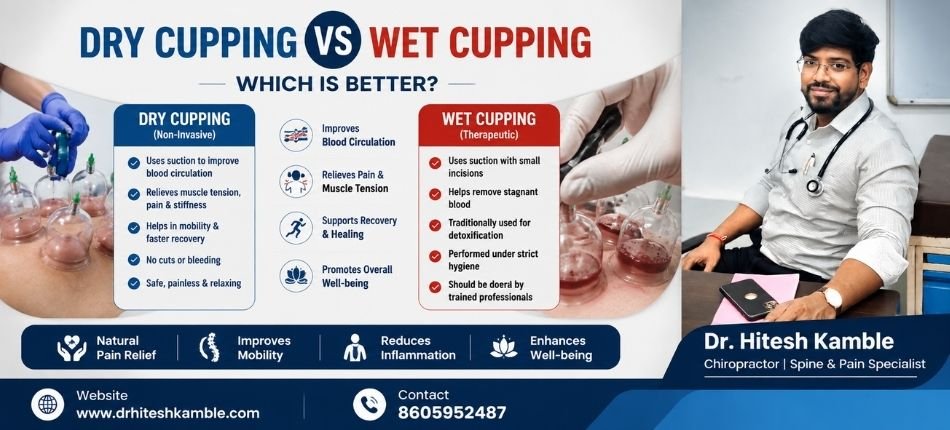
Dry cupping is a non-invasive therapy in which special cups are placed on the skin to create negative pressure through suction. This suction gently lifts the skin and underlying tissues, helping to increase blood circulation, reduce muscle tightness, relieve pain, and improve mobility. No cuts or bloodletting are involved, making it a popular choice for individuals seeking a comfortable and safe therapeutic treatment.
What Is Wet Cupping?
Wet cupping, also known as Hijama, is a therapy that combines suction with tiny superficial skin incisions to remove a small amount of blood. It is traditionally practiced in several cultures and is believed by some practitioners to aid detoxification. Since it involves minor skin incisions, it must always be performed under strict hygiene protocols by trained professionals to minimize the risk of infection.
Dry Cupping vs Wet Cupping: Key Differences
Although both techniques use suction cups, their procedures and intended outcomes differ.
- Dry Cupping is completely non-invasive and focuses on improving circulation, relaxing muscles, and reducing pain.
- Wet Cupping involves controlled superficial skin incisions after suction and removes a small amount of blood as part of the procedure.
- Dry cupping is commonly used for neck pain, back pain, shoulder stiffness, sports injuries, and muscle recovery.
- Wet cupping is more commonly sought for traditional therapeutic practices and should only be performed with appropriate medical precautions.
Benefits of Dry Cupping
Dry cupping offers several benefits for people suffering from musculoskeletal pain and stiffness. It helps improve blood circulation, reduces muscle tension, relieves trigger points, supports faster recovery after exercise, enhances flexibility, and promotes relaxation. It is frequently recommended for individuals with chronic neck pain, lower back pain, shoulder pain, and sports-related muscle tightness.
Benefits of Wet Cupping
Wet cupping is traditionally believed to help remove stagnant blood and improve circulation. Some people choose it for wellness or traditional healing purposes. Because it involves skin incisions, sterile techniques and professional supervision are essential to reduce the risk of infection and other complications.
Which Therapy Is Better?
The answer depends on your health condition and treatment goals. If your primary concern is muscle pain, stiffness, reduced mobility, sports injuries, or spinal discomfort, Dry Cupping is generally the preferred option because it is non-invasive and integrates well with chiropractic care and physiotherapy. Wet cupping may be chosen by individuals seeking traditional therapeutic practices, but it should always be performed by qualified practitioners following proper safety standards.
Is Dry Cupping Safe?
Dry cupping is generally considered safe when performed by trained professionals. Some people may experience temporary circular marks or mild skin discoloration, which usually fade within a few days. Serious complications are uncommon when proper techniques are used.
Who Should Avoid Cupping Therapy?
Cupping therapy may not be suitable for everyone. Individuals with bleeding disorders, severe skin infections, open wounds, uncontrolled medical conditions, or those taking certain blood-thinning medications should consult a healthcare professional before undergoing treatment.
Why Choose Dr. Hitesh Kamble?
Dr. Hitesh Kamble provides personalized chiropractic and rehabilitation treatments based on a detailed clinical assessment. Every patient receives an individualized treatment plan designed to address the underlying cause of pain rather than just the symptoms. By combining advanced chiropractic techniques with evidence-informed therapies, Dr. Kamble aims to help patients recover safely, improve mobility, and return to their daily activities comfortably.
Conclusion
Both Dry Cupping and Wet Cupping have their own applications, but the right choice depends on your condition and treatment objectives. For most musculoskeletal problems, Dry Cupping offers a safe, non-invasive approach that complements chiropractic care and rehabilitation. Consulting an experienced healthcare professional can help determine the most appropriate therapy for your needs.
Dry Cupping vs Wet Cupping Dry Cupping vs Wet Cupping Dry Cupping vs Wet Cupping Dry Cupping vs Wet Cupping Dry Cupping vs Wet Cupping Dry Cupping vs Wet Cupping Dry Cupping vs Wet Cupping Dry Cupping vs Wet Cupping Dry Cupping vs Wet Cupping Dry Cupping vs Wet Cupping Dry Cupping vs Wet Cupping
