
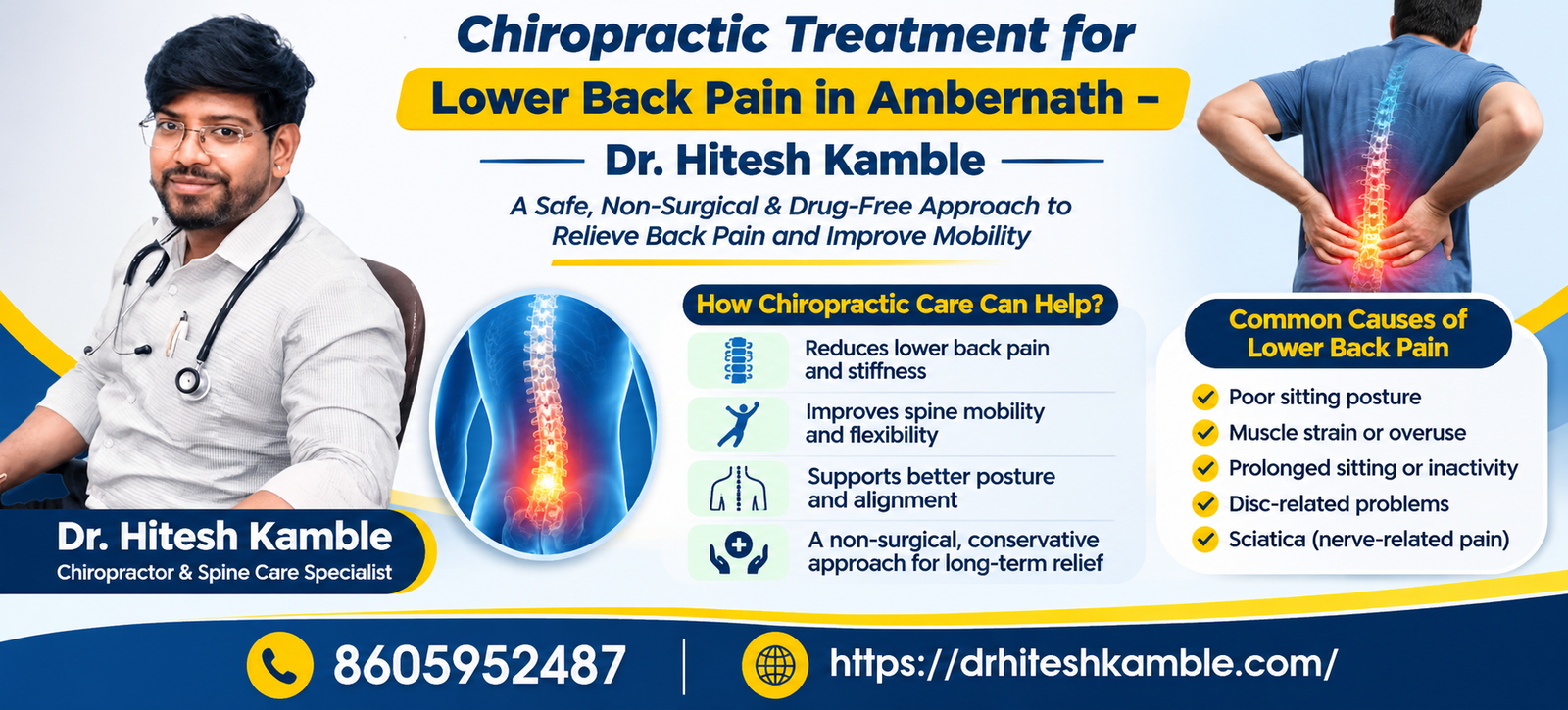
Chiropractic Treatment for Lower Back Pain in Ambernath – Dr. Hitesh Kamble
Introduction
Lower back pain is one of the most common musculoskeletal problems affecting people of different age groups. Whether you are an office employee sitting for long hours, a student maintaining poor posture, a homemaker performing repetitive household activities, or a working professional involved in physically demanding tasks, lower back pain can interfere with everyday movement, sleep, and overall quality of life. Many people experience back discomfort due to muscle strain, prolonged sitting, reduced physical activity, improper lifting techniques, or age-related changes in the spine. In some cases, lower back pain may also be associated with conditions such as sciatica, herniated discs, or spinal joint problems. If you are searching for a Chiropractor for Back Pain in Ambernath, understanding the available treatment options can help you make informed decisions about managing your symptoms.
At Dr. Hitesh Kamble’s Clinic, patients can explore Chiropractic Care in Ambernath and Back Pain Treatment in Ambernath for musculoskeletal discomfort, spinal stiffness, and movement-related difficulties. Chiropractic care may help selected patients with mechanical lower back pain by improving mobility and reducing discomfort, particularly when combined with appropriate exercises, posture guidance, and rehabilitation. In this comprehensive guide, we explain the common causes of lower back pain, how chiropractic treatment works, its potential benefits, available techniques, safety considerations, and practical tips for maintaining a healthier back.
1. What Is Lower Back Pain?
Lower back pain refers to discomfort, stiffness, aching, or pain experienced in the lumbar region of the spine, located between the lower ribs and the pelvis. The lumbar spine supports a significant portion of the body’s weight and plays an important role in bending, lifting, twisting, standing, and walking. Lower back pain may develop because of muscle strain, ligament irritation, reduced mobility, joint-related problems, or changes affecting the spinal discs and surrounding structures. Some people experience a dull, persistent ache, while others report sharp pain during specific movements or discomfort that spreads toward the buttocks or legs. Lower back pain can be acute, lasting a few days or weeks, or chronic when symptoms persist for more than three months. The appropriate management depends on the underlying cause, symptom severity, functional limitations, and individual health factors. Consulting a qualified healthcare professional can help determine whether conservative treatment, including chiropractic care and exercise-based rehabilitation, may be suitable.
2. Common Causes of Lower Back Pain
Understanding the possible causes of lower back pain is important before beginning treatment.
Poor Sitting Posture
Prolonged sitting, especially without movement breaks, may contribute to back discomfort and stiffness.
Office employees and people who work on computers for extended periods may experience increased symptoms when their workstations are poorly arranged or when they remain in one position for too long.
Muscle Strain
Sudden movements, improper lifting, repetitive bending, or strenuous physical activity can strain the muscles and supporting tissues of the lower back.
Muscle strain may cause pain, stiffness, and difficulty performing normal movements.
Sedentary Lifestyle
Limited physical activity may contribute to reduced muscular endurance and overall physical conditioning.
Regular movement and appropriate strengthening exercises can help support back health.
Disc-Related Problems
Changes affecting the intervertebral discs may sometimes contribute to lower back pain.
Certain disc conditions can also irritate nearby nerve structures, potentially causing symptoms in the legs.
Sciatica
Sciatica refers to symptoms associated with irritation or compression of nerve roots contributing to the sciatic nerve.
Patients may experience pain radiating from the lower back or buttock into one leg, sometimes accompanied by tingling or numbness.
Degenerative Spinal Changes
Age-related changes in spinal joints and discs are common.
However, imaging findings do not always explain a person’s pain, so symptoms and clinical examination are important.
Repetitive Physical Activities
Frequent bending, lifting, twisting, or prolonged standing may contribute to discomfort, particularly when the body is not adequately conditioned for the activity.
3. What Is Chiropractic Treatment for Lower Back Pain?
Chiropractic treatment for lower back pain is a conservative approach that focuses on assessing and managing certain musculoskeletal problems affecting the spine and surrounding structures. Chiropractic care may involve manual therapy, spinal mobilization, spinal manipulation, movement assessment, exercise recommendations, and advice on everyday activities. Spinal manipulation uses a controlled manual force applied to a joint, while mobilization generally involves gentler movements intended to improve mobility and reduce discomfort. These approaches may provide modest improvements in pain or function for some individuals with mechanical lower back pain, but results vary and treatment is not appropriate for every patient. A qualified practitioner should review the patient’s medical history, assess symptoms, screen for warning signs, and determine whether manual therapy is suitable. For people searching for a Chiropractor for Back Pain in Ambernath, it is important to choose a properly trained professional who explains the potential benefits, limitations, and risks of treatment and incorporates appropriate rehabilitation strategies.
4. How Does Chiropractic Treatment Help With Lower Back Pain?
Chiropractic care may help some patients manage mechanical lower back pain through a combination of manual treatment, movement guidance, and rehabilitation.
Improving Joint Mobility
Certain manual therapy techniques aim to improve movement in stiff or restricted joints.
Improved mobility may make some everyday activities more comfortable.
Reducing Pain and Stiffness
Spinal manipulation or mobilization may provide short-term improvements in pain and function for selected patients with nonspecific lower back pain.
However, the degree of improvement differs between individuals.
Supporting Better Movement Patterns
Movement assessment can help identify activities or positions that aggravate symptoms.
Patients may receive guidance on modifying these movements and gradually returning to normal activity.
Encouraging Physical Activity
Remaining appropriately active is an important part of managing most uncomplicated lower back pain.
Exercise and progressive rehabilitation can help improve strength, endurance, and confidence in movement.
Improving Functional Ability
The overall goal of conservative treatment is to help patients perform daily activities with less discomfort and better physical function.
Manual therapy should generally be considered part of a broader treatment plan rather than a stand-alone solution.
5. Signs You May Need Professional Assessment for Back Pain
Some lower back pain improves with time and appropriate self-care. However, professional assessment may be useful when symptoms persist or interfere with everyday life.
Common reasons to seek evaluation include:
-
Lower back pain that does not improve as expected
-
Recurrent episodes of back discomfort
-
Stiffness that restricts bending or movement
-
Pain associated with prolonged sitting or standing
-
Difficulty performing routine activities
-
Back pain that affects sleep or work
-
Pain radiating toward the buttocks or legs
Important: New bladder or bowel dysfunction, numbness around the groin or saddle area, or severe or progressive leg weakness requires urgent medical evaluation. Back pain associated with significant trauma, fever, or other concerning symptoms should also be assessed promptly.
6. Chiropractic Techniques Used for Lower Back Pain
Different techniques may be considered depending on the patient’s condition, clinical findings, and practitioner qualifications.
Spinal Manipulation
Spinal manipulation involves applying a controlled force to a spinal joint.
It may offer modest improvements in pain or function for some patients with nonspecific lower back pain.
It should only be performed after appropriate assessment and discussion of potential risks.
Spinal Mobilization
Mobilization involves slower, controlled joint movements.
It may be considered when gentler manual treatment is more appropriate.
Soft Tissue Therapy
Some practitioners use soft tissue techniques to address muscle discomfort and improve tolerance for movement.
These may be used alongside other rehabilitation methods.
Stretching and Mobility Exercises
Appropriate exercises can help maintain movement and address individual flexibility limitations.
Exercise selection should be based on symptoms rather than a one-size-fits-all routine.
Core Strengthening
Progressive strengthening of the trunk, hip, and surrounding muscles can improve physical capacity and support everyday activities.
Posture and Ergonomic Guidance
Patients may receive advice on workstation setup, movement breaks, lifting techniques, and activity modification.
The aim is to reduce unnecessary strain while maintaining regular movement.
7. Benefits of Chiropractic Care for Lower Back Pain
Chiropractic care may offer certain benefits for appropriately selected patients.
| Potential Benefit | How It May Help |
|---|---|
| Pain management | May provide modest short-term relief for some patients |
| Improved mobility | May reduce movement-related stiffness |
| Better daily function | Can support easier participation in routine activities |
| Conservative approach | Offers a nonsurgical treatment option |
| Individualized guidance | Helps identify aggravating movements and suitable activities |
| Rehabilitation support | Can be combined with exercise and self-management strategies |
Chiropractic treatment does not guarantee pain relief, prevent future episodes, or correct every underlying spinal condition.
Its effectiveness depends on the diagnosis, treatment approach, and individual response.
8. Chiropractic Treatment vs Physiotherapy for Lower Back Pain
Both chiropractic care and physiotherapy may be used in conservative management of musculoskeletal back pain.
| Chiropractic Care | Physiotherapy |
|---|---|
| May emphasize spinal manipulation and mobilization | Often emphasizes exercise-based rehabilitation and functional recovery |
| May include soft tissue treatment | May include manual therapy and soft tissue techniques |
| Can provide movement and activity advice | Can provide movement and activity advice |
| May be suitable for selected mechanical back pain | May be suitable for a broad range of musculoskeletal conditions |
| Should be based on clinical assessment | Should be based on clinical assessment |
There is considerable overlap between the two approaches.
The most appropriate treatment is determined by the patient’s condition, practitioner qualifications, available evidence, and treatment goals.
For many patients, exercise, education, and remaining active are central components of successful back pain management.
9. Is Chiropractic Treatment Safe for Lower Back Pain?
Spinal manipulation is generally associated with temporary side effects such as soreness, stiffness, or increased discomfort.
Serious complications are uncommon but possible.
Manual treatment may be unsuitable for people with certain conditions, including suspected fractures, significant spinal instability, some bone disorders, infection, malignancy, or serious neurological symptoms.
Patients should disclose their medical history, previous injuries, medications, and any relevant investigations before treatment.
A qualified practitioner should explain the proposed technique, potential risks, alternatives, and expected outcomes before obtaining informed consent.
Chiropractic treatment should not delay urgent medical assessment when warning signs of serious spinal or neurological conditions are present.
10. How Many Chiropractic Sessions Are Needed for Lower Back Pain?
The number of treatment sessions varies depending on the duration of symptoms, severity, clinical findings, functional limitations, and response to care.
Some patients experience improvement over a relatively short period, while others may require a longer rehabilitation plan.
However, no fixed number of chiropractic sessions is necessary or effective for every patient.
Treatment progress should be reviewed regularly using meaningful outcomes such as pain intensity, mobility, activity tolerance, and ability to perform everyday tasks.
If symptoms do not improve as expected, the diagnosis and treatment plan should be reassessed.
Patients should avoid committing to lengthy treatment packages without a clear clinical rationale and measurable goals.
11. Can Chiropractic Treatment Help With Sciatica?
Some people with sciatica experience lower back pain accompanied by pain, tingling, or numbness radiating into the leg.
Sciatica may be associated with irritation or compression of spinal nerve roots.
Conservative treatment may include education, activity modification, appropriate exercises, and selected manual therapy techniques.
However, chiropractic manipulation is not appropriate for every patient with radiating leg symptoms, particularly when neurological deficits or other warning signs are present.
Persistent or worsening symptoms require medical assessment.
Progressive leg weakness, new bladder or bowel problems, or saddle numbness requires urgent medical attention.
12. Chiropractic Treatment for Office Workers With Back Pain
Office workers frequently experience back discomfort associated with prolonged sitting, limited movement, and repetitive working positions.
Although posture alone does not explain every case of back pain, maintaining comfortable working conditions and taking regular movement breaks may help reduce symptoms.
Practical Tips for Office Workers
Adjust Your Chair: Use a comfortable sitting position that supports your body and allows you to change posture easily.
Position Your Screen Properly: Keep the monitor at a comfortable viewing height and distance.
Take Movement Breaks: Stand, walk, or change position regularly throughout the workday.
Stay Physically Active: Include regular walking and suitable strengthening exercises.
Avoid Remaining in One Position: Movement variation is often more useful than trying to maintain one supposedly perfect posture all day.
Seek Assessment When Needed: Persistent or worsening symptoms should be evaluated by a qualified healthcare professional.
13. Exercises That May Help Prevent Recurrent Lower Back Pain
Exercise is an important part of maintaining physical capacity and managing recurrent lower back pain.
A suitable exercise program may include:
Walking
Regular walking is a simple way to remain active and maintain general fitness.
Gentle Lumbar Mobility Exercises
Controlled movements may help reduce stiffness and improve comfort.
Glute Strengthening
Strengthening the hip muscles can support activities such as walking, lifting, and climbing stairs.
Core Strengthening
Exercises targeting trunk strength and endurance can improve tolerance for everyday physical tasks.
Hip Mobility Exercises
Appropriate hip mobility work may help individuals who experience movement restrictions during certain activities.
Exercise should be adapted to the individual’s symptoms, fitness level, and medical condition.
Stop an activity and seek professional advice if it causes significant worsening of symptoms, new neurological problems, or unusual pain.
14. Lifestyle Changes to Support Long-Term Back Health
Lower back pain management often requires attention to daily habits as well as clinical treatment.
Stay Active
Regular physical activity can help maintain strength, mobility, and overall health.
Use Appropriate Lifting Techniques
Keep loads manageable, avoid sudden twisting under heavy loads, and use assistance when necessary.
Maintain a Comfortable Sleep Setup
Choose a sleeping position and mattress that allow adequate comfort and rest.
Manage Work-Related Strain
Alternate activities when possible and take appropriate breaks from repetitive tasks.
Maintain General Health
Adequate sleep, balanced nutrition, and smoking cessation can support overall health and recovery.
Continue Suitable Exercises
A consistent strengthening and mobility program may help reduce the impact of recurrent back pain.
15. When Should You Avoid Chiropractic Manipulation?
Chiropractic manipulation may help some individuals experiencing mechanical lower back pain, but it is not suitable for everyone. Patients with certain medical conditions should avoid spinal manipulation unless they have undergone a thorough medical evaluation and the treatment has been confirmed as safe. Conditions such as severe osteoporosis, spinal fractures, significant spinal instability, spinal infections, and certain spinal tumors may increase the risk of complications during manual spinal adjustments. Individuals experiencing progressive muscle weakness, significant numbness, or symptoms suggesting serious nerve compression should also seek medical assessment before considering chiropractic treatment. Warning signs such as loss of bladder or bowel control, numbness around the groin or saddle area, or rapidly worsening leg weakness may indicate cauda equina syndrome, a medical emergency requiring immediate evaluation. Patients with a history of spinal surgery, inflammatory spinal disorders, or other complex medical conditions should inform their healthcare professional before undergoing manipulation. A qualified practitioner should carefully review the patient’s medical history, assess neurological symptoms, and determine whether manual therapy is appropriate. For individuals seeking a Chiropractor for Back Pain in Ambernath, consulting Dr. Hitesh Kamble for an initial assessment can help identify whether conservative treatment, exercise-based rehabilitation, or referral for further medical evaluation is the most appropriate approach. The priority should always be patient safety, accurate diagnosis, and selecting treatment based on individual health needs.
16. Why Choose Dr. Hitesh Kamble for Back Pain Consultation in Ambernath?
Finding an appropriate healthcare professional is an important step when lower back pain begins affecting everyday activities.
Dr. Hitesh Kamble in Ambernath provides care focused on musculoskeletal concerns, including back pain, posture-related discomfort, and movement difficulties.
Patients seeking a Chiropractor for Back Pain in Ambernath can enquire about available assessment and treatment options and discuss whether chiropractic techniques, physiotherapy-based rehabilitation, or other conservative approaches may be appropriate.
A personalized assessment should consider the patient’s symptoms, medical history, physical examination findings, activity limitations, and treatment goals.
The objective of conservative back pain care is to improve comfort, support functional movement, and help patients manage symptoms safely.
Conclusion
Lower back pain can interfere with work, sleep, movement, and daily activities. Understanding its possible causes and choosing an appropriate treatment approach are important steps toward managing symptoms effectively.
For some individuals, chiropractic care may offer modest improvements in pain and mobility, particularly when combined with exercise, education, and activity modification.
However, chiropractic treatment for lower back pain is not suitable for every condition, and proper assessment is essential before beginning manual therapy.
If you are searching for a Chiropractor for Back Pain in Ambernath, consider consulting a qualified healthcare professional who can evaluate your symptoms and recommend appropriate conservative treatment options.
Consult Dr. Hitesh Kamble – Back Pain Treatment in Ambernath
For lower back pain, musculoskeletal discomfort, posture-related concerns, and rehabilitation guidance, contact Dr. Hitesh Kamble’s clinic in Ambernath.
Chiropractor for Back Pain in Ambernath Chiropractor for Back Pain in Ambernath Chiropractor for Back Pain in Ambernath Chiropractor for Back Pain in Ambernath Chiropractor for Back Pain in Ambernath Chiropractor for Back Pain in Ambernath Chiropractor for Back Pain in Ambernath Chiropractor for Back Pain in Ambernath Chiropractor for Back Pain in Ambernath Chiropractor for Back Pain in Ambernath Chiropractor for Back Pain in Ambernath Chiropractor for Back Pain in Ambernath Chiropractor for Back Pain in Ambernath Chiropractor for Back Pain in Ambernath Chiropractor for Back Pain in Ambernath Chiropractor for Back Pain in Ambernath Chiropractor for Back Pain in Ambernath Chiropractor for Back Pain in Ambernath Chiropractor for Back Pain in Ambernath Chiropractor for Back Pain in Ambernath Chiropractor for Back Pain in Ambernath Chiropractor for Back Pain in Ambernath Chiropractor for Back Pain in Ambernath Chiropractor for Back Pain in Ambernath Chiropractor for Back Pain in Ambernath
