
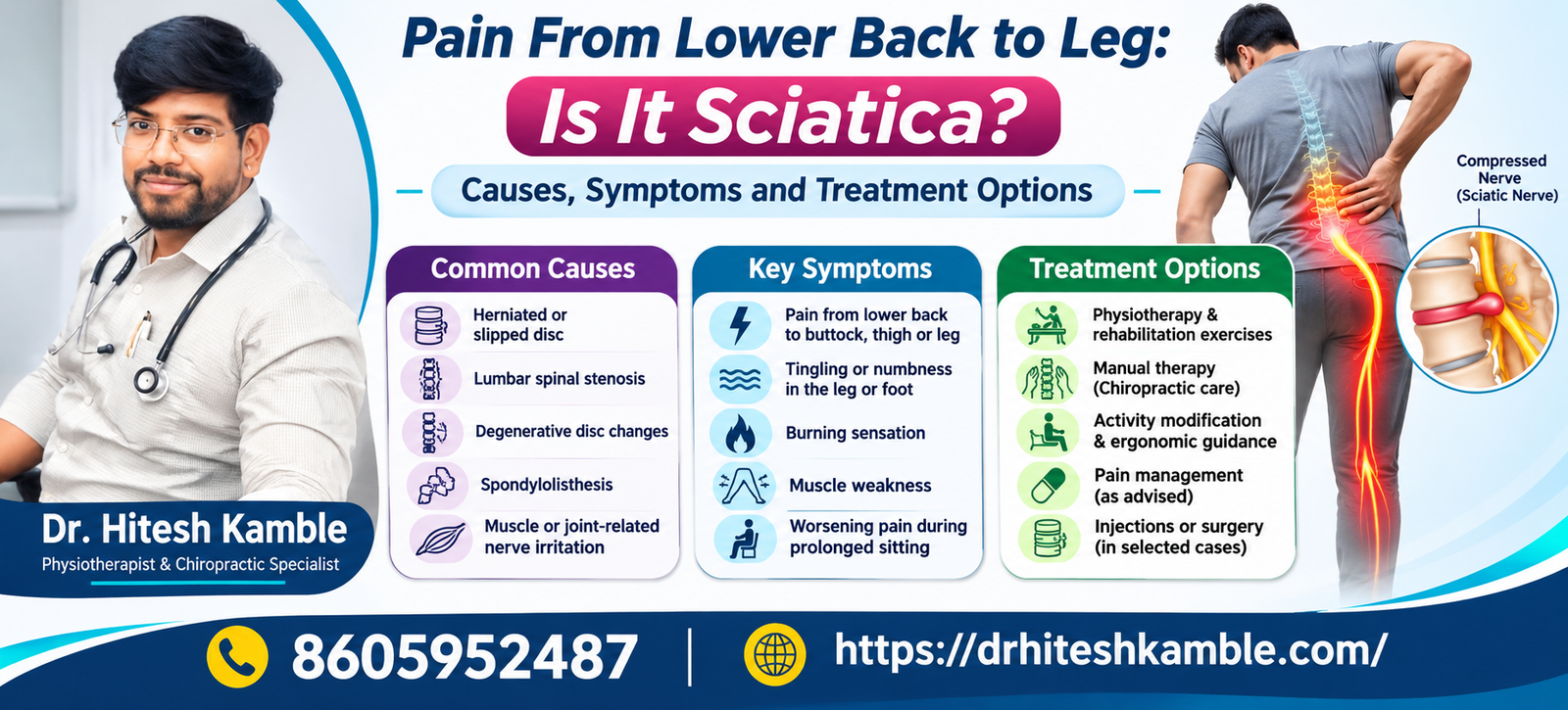
Pain From Lower Back to Leg: Is It Sciatica? Causes, Symptoms and Treatment Options – Dr. Hitesh Kamble
Introduction
Lower back pain is one of the most common musculoskeletal problems affecting people of all ages. However, when pain starts in the lower back and travels down through the buttocks, thighs, calves, or feet, it may indicate a condition involving the sciatic nerve or nerve roots in the lower spine.
Lower back pain radiating to leg is a common symptom of sciatica, a condition that occurs when nerve roots contributing to the sciatic nerve become irritated or compressed. This discomfort can range from mild aching to sharp, shooting pain that interferes with walking, sitting, standing, and everyday activities.
Many people ignore these symptoms, assuming they are caused by muscle strain or prolonged sitting. However, persistent radiating pain, tingling, numbness, or muscle weakness may require professional medical evaluation.
At Dr. Hitesh Kamble’s clinic in Ambernath, patients experiencing lower back pain, sciatica symptoms, and mobility-related problems can seek professional assessment and personalized rehabilitation guidance. Learn more about the available treatment approaches through Chiropractic Care in Ambernath.
In this article, we explain the causes of lower back pain radiating to the leg, common sciatica symptoms, available treatment options, preventive measures, and when to consult a healthcare professional.
What Is Sciatica?
Sciatica refers to pain that travels along the pathway of the sciatic nerve, usually affecting one side of the body. The sciatic nerve is formed from nerve roots in the lower spine and extends through the buttocks into the legs.
When these nerve roots become irritated or compressed, pain may spread from the lower back into the buttock, thigh, calf, or foot.
Sciatica is not a disease itself. It is a symptom pattern that may result from underlying spinal conditions, such as a herniated disc or spinal narrowing.
Common characteristics of sciatica include:
- Pain beginning in the lower back or buttock and extending down one leg
- Sharp, burning, or electric shock-like sensations
- Tingling or numbness in the affected leg
- Discomfort that worsens during prolonged sitting
- Pain triggered by coughing, sneezing, or certain movements
- Weakness in the affected leg in some cases
Not every case of lower back pain radiating to the leg is sciatica. A proper clinical assessment is important to identify the underlying cause.
Why Does Lower Back Pain Radiate to the Leg?
The lower spine contains vertebrae, intervertebral discs, muscles, ligaments, and nerves that help support movement and stability.
Nerve roots exit the spinal column through small openings and provide sensation and movement to different parts of the legs.
When a nerve root becomes compressed or inflamed, discomfort may travel along its distribution instead of remaining limited to the lower back.
This explains why someone with a lower spine problem may experience pain in the thigh, calf, or foot.
The exact location and severity of symptoms depend on which nerve root is affected and the underlying condition.
Common Causes of Lower Back Pain Radiating to Leg
Several conditions can cause lower back pain that extends into the legs.
1. Herniated Disc or Slipped Disc
A herniated disc occurs when the soft inner portion of an intervertebral disc pushes through a weakened area of its outer layer.
If the disc irritates or compresses a nearby nerve root, it may cause radiating pain, numbness, tingling, or weakness.
A lumbar disc herniation is one of the common causes of sciatica, particularly in younger and middle-aged adults.
2. Lumbar Spinal Stenosis
Lumbar spinal stenosis refers to narrowing of the spinal canal or spaces around the spinal nerves.
This narrowing may place pressure on nerve structures and cause pain, tingling, heaviness, or weakness in the legs.
Symptoms may worsen during walking or standing and improve when sitting or bending forward.
Lumbar spinal stenosis is more common in older adults.
3. Degenerative Disc Changes
With age, spinal discs may gradually lose hydration and flexibility.
These changes can sometimes contribute to narrowing around the spinal nerves or irritation of nerve roots.
Although degenerative changes are common and do not always cause pain, some individuals may develop radiating leg symptoms.
4. Spondylolisthesis
Spondylolisthesis occurs when one vertebra slips forward relative to the vertebra below it.
In certain cases, this may narrow the space available for spinal nerves, leading to lower back pain and radiating leg discomfort.
5. Deep Gluteal Syndrome
Sometimes the sciatic nerve becomes irritated or compressed outside the spine, particularly in the deep buttock region.
This may cause buttock pain extending into the leg, especially during prolonged sitting or certain hip movements.
6. Muscle and Joint-Related Referred Pain
Not all radiating leg pain is caused by nerve compression.
Muscle strain, sacroiliac joint dysfunction, and certain hip conditions may cause referred pain into the buttock or thigh.
These conditions may resemble sciatica but require different treatment approaches.
Lower Back Pain Radiating to Leg: Common Symptoms
Symptoms can vary depending on the affected nerve and severity of irritation.
Sharp or Shooting Pain
One of the most recognizable sciatica symptoms is sharp pain that travels from the lower back or buttock into the leg.
Some individuals describe the sensation as an electric shock.
Burning Sensation in the Leg
Sciatic nerve irritation may cause a burning or hot sensation along the affected nerve pathway.
Tingling or Pins and Needles
A person may experience tingling in the thigh, calf, foot, or toes.
This sensation may occur intermittently or persist for longer periods.
Numbness
Reduced sensation in part of the leg or foot may indicate nerve involvement.
Muscle Weakness
Some individuals develop weakness when lifting the foot, standing on their toes, or performing certain leg movements.
New or progressive weakness requires prompt medical assessment.
Pain During Sitting or Walking
Prolonged sitting may aggravate symptoms associated with a lumbar disc problem, while walking or standing may worsen symptoms caused by spinal stenosis.
The pattern varies depending on the underlying condition.
Sciatica vs Normal Lower Back Pain: What’s the Difference?
Understanding the difference between ordinary lower back pain and sciatica can help identify when nerve-related symptoms may be present.
| Normal Lower Back Pain | Sciatica |
|---|---|
| Usually remains around the lower back | Often travels into the buttock and leg |
| May result from muscle or joint problems | Often involves irritation of lumbar nerve roots |
| Commonly causes localized aching or stiffness | May cause sharp, shooting, or burning pain |
| Numbness and tingling are less typical | Numbness and tingling may occur |
| Usually does not cause neurological weakness | May cause leg or foot weakness |
| Often improves with movement and conservative care | May require targeted assessment and rehabilitation |
Important: Symptoms can overlap. A healthcare professional can determine whether the pain is nerve-related or caused by another musculoskeletal condition.
Who Is at Risk of Developing Sciatica?
Certain factors may increase the likelihood of developing sciatica or related lower back problems.
Prolonged Sitting: Extended sitting may aggravate existing lumbar disc-related symptoms.
Physically Demanding Work: Repeated heavy lifting, bending, and twisting can place additional stress on the lower back.
Age-Related Changes: Degenerative changes in the spine may contribute to nerve compression.
Obesity: Excess body weight can increase mechanical stress on the lower back.
Smoking: Smoking is associated with an increased risk of certain spinal problems.
Previous Back Injuries: Past spinal injuries or recurrent lower back pain may contribute to ongoing symptoms.
Although these factors may increase risk, sciatica can also occur without an obvious trigger.
How Is Sciatica Diagnosed?
Sciatica is diagnosed through a detailed medical history, physical examination, and assessment of nerve-related symptoms. When a patient experiences lower back pain radiating to leg, a healthcare professional first evaluates the location, intensity, duration, and pattern of pain. They may ask whether the discomfort travels from the lower back through the buttocks, thighs, calves, or feet and whether it is accompanied by tingling, numbness, burning sensations, or muscle weakness. Understanding which activities worsen or relieve the symptoms helps identify possible causes, such as a herniated disc, lumbar spinal stenosis, or nerve root irritation.
During the physical examination, the healthcare professional may assess spinal mobility, muscle strength, reflexes, sensation, posture, and walking patterns. Specific clinical tests, such as the Straight Leg Raise Test, may be performed to evaluate signs of nerve root irritation. These assessments help distinguish sciatica from other conditions that can cause lower back and leg pain, including muscle strains, hip problems, and sacroiliac joint dysfunction. In certain cases, particularly when symptoms persist, worsen, or involve significant neurological changes, imaging tests such as an MRI may be recommended to investigate possible nerve compression or structural abnormalities. However, imaging is not routinely necessary for every patient experiencing sciatica.
At Dr. Hitesh Kamble’s clinic in Ambernath, a thorough musculoskeletal and neurological assessment can help guide an appropriate treatment and rehabilitation plan. Early identification of the underlying cause of lower back pain radiating to leg can support effective symptom management, improve mobility, and help patients return to their everyday activities.
Is an MRI Necessary for Sciatica?
An MRI is not routinely required for every patient with sciatica.
Imaging may be recommended when symptoms are severe, progressive neurological deficits are present, serious underlying conditions are suspected, or symptoms persist despite appropriate conservative treatment.
MRI can help identify disc herniation, spinal stenosis, and other structural causes of nerve compression.
Treatment Options for Lower Back Pain Radiating to Leg
Treatment depends on the underlying cause, symptom severity, neurological findings, and individual health conditions.
Many people with uncomplicated sciatica improve over time with conservative management.
1. Physiotherapy for Sciatica
Physiotherapy is commonly recommended for managing lower back pain radiating to the leg.
A personalized rehabilitation program may include exercises to improve mobility, strengthen supporting muscles, and gradually restore functional activities.
Potential benefits of physiotherapy include:
- Improving spinal and hip mobility
- Strengthening core and supporting muscles
- Supporting better movement patterns
- Improving walking and daily activity tolerance
- Reducing fear of movement
- Helping prevent recurrent episodes
Exercise selection should be individualized because certain movements may aggravate symptoms in some patients.
2. Targeted Stretching and Mobility Exercises
Gentle stretching and mobility exercises may help reduce muscle stiffness and improve movement tolerance.
However, aggressive stretching can sometimes worsen nerve-related pain.
Exercises should be performed according to individual tolerance and professional guidance.
3. Core Strengthening Exercises
Strengthening the abdominal, back, and hip muscles can help improve spinal support and functional stability.
A physiotherapist may recommend exercises such as modified bridges, pelvic control exercises, and progressive trunk strengthening.
The specific exercises depend on the patient’s condition and recovery stage.
4. Activity Modification and Ergonomic Guidance
Activity modification and ergonomic guidance play an important role in managing lower back pain radiating to leg, particularly when symptoms are associated with sciatica, prolonged sitting, repetitive movements, or improper lifting techniques. Everyday activities such as sitting at a desk for extended periods, bending repeatedly, lifting heavy objects, or maintaining uncomfortable postures may aggravate existing nerve irritation and increase discomfort. Making practical adjustments to daily activities can help reduce unnecessary strain on the lower back while supporting recovery. However, complete bed rest is generally not recommended for uncomplicated sciatica, as prolonged inactivity may contribute to muscle weakness, stiffness, and reduced mobility.
Ergonomic improvements may include adjusting chair height, positioning the computer screen at eye level, keeping the feet comfortably supported, and maintaining a relaxed sitting posture. Individuals who work at desks should take regular movement breaks, change positions frequently, and avoid remaining seated for long periods. People involved in physically demanding jobs may benefit from learning safer lifting techniques, keeping loads close to the body, avoiding sudden twisting movements, and using appropriate equipment when handling heavy objects. Gentle walking and gradual participation in comfortable daily activities may also help maintain flexibility, strength, and functional independence.
At Dr. Hitesh Kamble’s clinic in Ambernath, individualized physiotherapy guidance can help patients understand how their daily habits and workplace activities may influence sciatica symptoms. A rehabilitation program may include posture education, ergonomic recommendations, movement modification, and progressive strengthening exercises tailored to the patient’s condition. By combining appropriate activity modification with professional physiotherapy, individuals experiencing sciatica and lower back pain radiating to leg may improve movement tolerance, manage discomfort, and reduce the likelihood of recurring episodes. Patients should seek prompt medical assessment if they develop new or worsening leg weakness, numbness, or other neurological symptoms.
5. Pain Management
A healthcare professional may recommend suitable pain-relief options based on the patient’s symptoms, medical history, and potential medication risks.
Nonsteroidal anti-inflammatory drugs may be considered in selected cases, but they are not appropriate for everyone and their benefit for sciatica can be limited.
Medication should be taken only as advised by a qualified medical professional.
6. Manual Therapy
Certain manual therapy techniques may be used as part of a broader rehabilitation program.
Manual therapy should not replace appropriate exercise, education, and functional rehabilitation.
Spinal manipulation is not suitable for every patient, especially when neurological symptoms or other contraindications are present.
7. Injections or Surgical Treatment
For selected patients with severe or persistent symptoms, a specialist may consider procedures such as epidural injections or surgery.
Surgical treatment may be considered when imaging findings correspond with symptoms and significant pain or neurological problems persist despite appropriate conservative management.
Progressive neurological deficits may require more urgent evaluation.
Can Sciatica Be Treated Without Surgery?
Yes. Many individuals with sciatica improve without surgery.
Conservative treatment may include education, staying appropriately active, physiotherapy, exercise, and symptom management.
Recovery depends on the cause of nerve irritation, severity of symptoms, duration of pain, and individual health factors.
However, surgery may be appropriate for certain patients with persistent disabling symptoms or significant neurological deficits.
Best Exercises for Lower Back Pain Radiating to Leg
Exercises can be helpful for many patients, but there is no single exercise routine suitable for every type of sciatica.
A physiotherapist may recommend:
Pelvic Tilts: Help improve awareness and control of lower back movement.
Modified Bridges: Strengthen the gluteal and supporting trunk muscles.
Gentle Walking: Supports mobility and gradual return to normal activity.
Lumbar Mobility Exercises: May improve comfortable spinal movement when selected appropriately.
Nerve Mobilization Exercises: May be considered in certain cases to improve nerve movement tolerance.
Exercises should not cause worsening radiating pain, increasing numbness, or weakness. Stop the activity and seek professional guidance if symptoms worsen.
When Should You See a Doctor for Lower Back Pain Radiating to Leg?
Occasional lower back discomfort may improve with conservative care. However, persistent or worsening radiating leg pain should not be ignored.
Consult a healthcare professional if pain continues for several weeks, interferes with daily activities, repeatedly returns, or is accompanied by tingling, numbness, or weakness.
Seek emergency medical care if you experience:
- New difficulty passing urine or loss of bladder control
- Loss of bowel control
- Numbness around the groin, genitals, or inner thighs
- Severe or rapidly progressive leg weakness
- Significant symptoms affecting both legs, particularly with bladder, bowel, or saddle-area changes
These symptoms may indicate a serious condition such as cauda equina syndrome, which requires urgent medical assessment.
Back pain accompanied by fever, significant trauma, or other concerning systemic symptoms also warrants prompt medical evaluation.
How to Prevent Sciatica and Recurrent Lower Back Pain
Although not every episode of sciatica can be prevented, certain lifestyle habits may help support spinal health.
Maintain Regular Physical Activity
Walking, swimming, and suitable strengthening exercises can support mobility and physical fitness.
Strengthen Your Core Muscles
Regular strengthening exercises can improve trunk strength and help support everyday movements.
Avoid Prolonged Inactivity
Take regular breaks from sitting and gradually increase movement throughout the day.
Practice Safe Lifting Techniques
Keep objects close to the body, avoid sudden twisting while lifting, and use assistance for heavy loads when necessary.
Maintain a Healthy Body Weight
Weight management may help reduce mechanical stress on the spine.
Follow an Individualized Exercise Program
People with recurring back pain may benefit from a physiotherapist-guided exercise plan based on their needs and physical capacity.
Physiotherapy for Sciatica in Ambernath – Dr. Hitesh Kamble
If you are experiencing lower back pain radiating to leg, persistent back discomfort, tingling, or reduced mobility, professional assessment can help identify the possible cause and guide appropriate management.
Dr. Hitesh Kamble provides physiotherapy and musculoskeletal care services in Ambernath, with an emphasis on individualized assessment and rehabilitation.
Depending on the patient’s condition, rehabilitation may focus on improving mobility, building strength, managing symptoms, and supporting a safe return to daily activities.
Learn more about Dr. Hitesh Kamble’s services:
https://drhiteshkamble.com/chiropractic-care-in-ambernath/
Seeking timely professional advice can help patients understand their symptoms and explore appropriate treatment options.
Conclusion
Lower back pain radiating to leg can be uncomfortable and disruptive, particularly when accompanied by shooting pain, tingling, numbness, or weakness.
Sciatica is one possible explanation, but several spinal and musculoskeletal conditions can cause similar symptoms.
Understanding the causes, recognizing warning signs, and receiving appropriate medical assessment are important steps toward effective management.
Physiotherapy, individualized exercises, activity modification, and rehabilitation may help many patients improve mobility and return to everyday activities.
If you are experiencing persistent radiating leg pain, consider consulting Dr. Hitesh Kamble in Ambernath for professional guidance and an appropriate rehabilitation plan.
Take the First Step Towards Better Movement and a Healthier Back!
Lower Back Pain Radiating to Leg Lower Back Pain Radiating to Leg Lower Back Pain Radiating to Leg Lower Back Pain Radiating to Leg Lower Back Pain Radiating to Leg Lower Back Pain Radiating to Leg Lower Back Pain Radiating to Leg Lower Back Pain Radiating to Leg Lower Back Pain Radiating to Leg Lower Back Pain Radiating to Leg Lower Back Pain Radiating to Leg Lower Back Pain Radiating to Leg Lower Back Pain Radiating to Leg Lower Back Pain Radiating to Leg Lower Back Pain Radiating to Leg Lower Back Pain Radiating to Leg Lower Back Pain Radiating to Leg Lower Back Pain Radiating to Leg Lower Back Pain Radiating to Leg Lower Back Pain Radiating to Leg Lower Back Pain Radiating to Leg Lower Back Pain Radiating to Leg Lower Back Pain Radiating to Leg Lower Back Pain Radiating to Leg Lower Back Pain Radiating to Leg Lower Back Pain Radiating to Leg
