
Spinal Stenosis Treatment in Ambernath
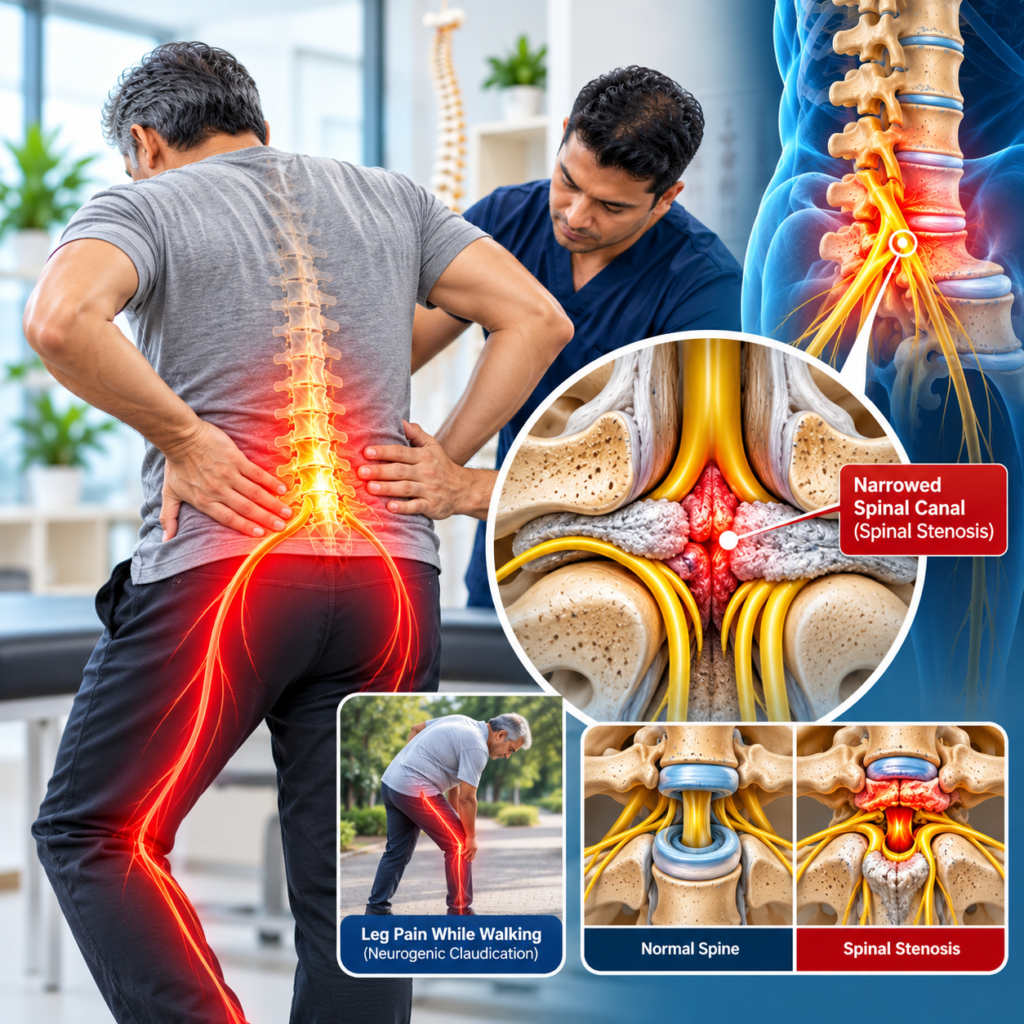
Spinal stenosis is a condition in which the spaces within the spine become narrowed, potentially placing pressure on the spinal cord or nearby nerves. This narrowing can cause back pain, neck discomfort, tingling, numbness, and difficulty walking. Although spinal stenosis is more common among older adults, it can also develop due to injuries, congenital spinal differences, or other spinal conditions.
If you are experiencing persistent back pain, leg discomfort, or difficulty standing and walking for extended periods, seeking professional evaluation for Spinal Stenosis Treatment in Ambernath can help identify the underlying cause and determine appropriate treatment options.
Dr. Hitesh Kamble provides consultation for musculoskeletal and spine-related concerns, focusing on appropriate non-surgical care, mobility improvement, and patient education. Spinal Stenosis Treatment in Ambernath Spinal Stenosis Treatment in Ambernath Spinal Stenosis Treatment in Ambernath Spinal Stenosis Treatment in Ambernath Spinal Stenosis Treatment in Ambernath Spinal Stenosis Treatment in Ambernath
What Is Spinal Stenosis?
Spinal stenosis refers to the narrowing of the spinal canal or openings through which spinal nerves travel. The spine contains vertebrae, intervertebral discs, joints, and ligaments that protect and support the spinal cord and nerve roots.
When these spaces become narrower, surrounding structures may place pressure on the nerves or spinal cord.
Spinal stenosis most commonly affects the lumbar spine (lower back) and cervical spine (neck).
Some individuals have spinal narrowing visible on imaging without experiencing symptoms. Others develop discomfort, neurological symptoms, or limitations in everyday activities. Spinal Stenosis Treatment in Ambernath Spinal Stenosis Treatment in AmbernathSpinal Stenosis Treatment in Ambernath Spinal Stenosis Treatment in Ambernath Spinal Stenosis Treatment in Ambernath Spinal Stenosis Treatment in Ambernath Spinal Stenosis Treatment in Ambernath Spinal Stenosis Treatment in Ambernath
Types of Spinal Stenosis
1. Lumbar Spinal Stenosis
Lumbar spinal stenosis affects the lower back and is one of the most common forms of spinal narrowing.
Patients may experience lower back discomfort, pain extending into the buttocks or legs, and difficulty walking or standing for long periods.
A characteristic symptom is neurogenic claudication, where leg discomfort develops during walking or standing and often improves when sitting or bending forward.
2. Cervical Spinal Stenosis
Cervical spinal stenosis affects the neck region.
When nerve roots are compressed, patients may experience neck pain, arm pain, numbness, or weakness.
More serious cases involving spinal cord compression can cause difficulty walking, balance problems, loss of hand coordination, or other neurological symptoms.
3. Thoracic Spinal Stenosis
Thoracic spinal stenosis affects the middle portion of the spine and is less common.
When symptomatic, it may cause mid-back discomfort or neurological problems related to spinal cord compression.
Thoracic spinal cord compression requires appropriate specialist evaluation.
Common Symptoms of Spinal Stenosis
Lower Back Pain
Some patients experience persistent or recurring lower back discomfort, particularly during prolonged standing or walking.
Leg Pain While Walking
Lumbar spinal stenosis may cause aching, heaviness, tingling, or weakness in the legs during walking.
Symptoms may improve when the patient sits down or leans forward.
Neck Pain and Stiffness
Cervical spinal stenosis may be associated with neck discomfort, restricted movement, or pain extending toward the shoulders.
Tingling and Numbness
Pressure on spinal nerves may cause altered sensation in the arms, hands, legs, or feet.
Muscle Weakness
Significant nerve compression can affect muscle strength and movement.
Balance and Walking Difficulties
Spinal cord compression in the cervical or thoracic region may interfere with coordination and balance.
Important: Progressive weakness, new bladder or bowel dysfunction, saddle numbness, or worsening walking difficulties require urgent medical evaluation.
What Causes Spinal Stenosis?
Age-Related Degenerative Changes
As people age, spinal discs, joints, and ligaments undergo structural changes that may reduce the available space around spinal nerves.
Bone Spur Formation
Degenerative spinal changes may lead to osteophytes, commonly called bone spurs, which can contribute to narrowing.
Thickening of Spinal Ligaments
Ligaments supporting the spine may become thicker over time and reduce space within the spinal canal.
Herniated Discs
A herniated disc may contribute to narrowing around spinal nerves.
Spondylolisthesis
When one vertebra slips relative to another, the resulting changes may narrow the spinal canal or nerve openings.
Congenital Spinal Narrowing
Some individuals are born with a relatively narrow spinal canal, increasing their susceptibility to symptoms later in life.
Previous Spinal Injuries
Certain injuries or structural changes following trauma may contribute to spinal narrowing.
How Is Spinal Stenosis Diagnosed?
Accurate diagnosis requires understanding the patient’s symptoms, neurological findings, and relevant imaging results.
Medical History
A healthcare professional may ask about the location and duration of pain, walking tolerance, changes in symptoms during sitting or bending, and any neurological complaints.
Physical Examination
The examination may assess spinal mobility, muscle strength, reflexes, sensation, balance, and walking ability.
MRI Scan
MRI is commonly used to evaluate the spinal canal, discs, ligaments, and nerve structures when clinically indicated.
CT Scan
CT imaging may help evaluate bony structures and certain causes of spinal narrowing.
X-Ray Examination
X-rays may reveal degenerative changes or spinal alignment abnormalities but do not directly show all nerve structures.
Imaging findings should always be interpreted alongside symptoms and clinical examination.
Non-Surgical Spinal Stenosis Treatment in Ambernath
Many patients with lumbar spinal stenosis can initially be managed using conservative approaches, depending on symptom severity and neurological findings.
Treatment generally focuses on maintaining mobility, reducing discomfort, and improving everyday function.
1. Personalized Spine Assessment
A detailed clinical assessment helps determine the severity and pattern of symptoms.
The evaluation may include spinal movement, neurological function, walking tolerance, and activities that aggravate or relieve discomfort.
2. Exercise-Based Rehabilitation
Individualized rehabilitation exercises may help improve strength, flexibility, and functional mobility.
Some patients with lumbar spinal stenosis tolerate exercises involving gentle forward bending better than activities involving prolonged spinal extension.
Exercise selection should be guided by symptoms and professional assessment.
3. Physiotherapy and Mobility Training
Physiotherapy may include progressive strengthening, mobility exercises, walking programs, and education about symptom management.
Rehabilitation aims to improve physical function rather than reverse structural narrowing.
4. Chiropractic and Manual Therapy
Selected patients may benefit from gentle manual therapy as part of a broader rehabilitation program.
However, spinal manipulation is not appropriate for everyone, particularly patients with spinal cord compression, progressive neurological deficits, significant instability, or other contraindications.
Manual therapy cannot physically widen a narrowed spinal canal.
5. Posture and Activity Modification
Patients with lumbar spinal stenosis may find certain positions more comfortable than others.
For example, sitting or leaning forward may reduce leg symptoms in some individuals.
Activity modification can help patients remain mobile while avoiding unnecessary symptom aggravation.
6. Medical Pain Management
A doctor may recommend suitable medication or other interventions depending on symptoms and medical history.
Medication decisions should consider potential benefits, risks, and individual health conditions.
7. Follow-Up and Specialist Referral
Regular reassessment helps monitor walking ability, neurological symptoms, and treatment response.
Patients with progressive weakness, spinal cord compression, or persistent disabling symptoms may require specialist evaluation.
Benefits of Non-Surgical Spinal Stenosis Management
Appropriate conservative care may help suitable patients improve daily function and manage symptoms.
Potential benefits include:
Improved walking tolerance
Better muscle conditioning
Reduced activity-related discomfort
Improved movement confidence
Greater understanding of symptom management
Support for maintaining independence
Results vary depending on the severity of spinal narrowing, neurological involvement, and individual treatment response.
Lumbar Spinal Stenosis vs Cervical Spinal Stenosis
Lumbar Spinal Stenosis | Cervical Spinal Stenosis |
|---|---|
Affects the lower back | Affects the neck |
Often causes leg symptoms | May cause arm or hand symptoms |
Walking or standing may aggravate symptoms | May affect balance or hand coordination if the spinal cord is compressed |
Sitting or bending forward may provide relief | Symptoms depend on nerve or spinal cord involvement |
Commonly associated with neurogenic claudication | Can cause cervical radiculopathy or myelopathy |
Both conditions require appropriate evaluation, particularly when neurological symptoms are present.
Can Spinal Stenosis Be Treated Without Surgery?
Yes. Many patients with lumbar spinal stenosis can manage symptoms through exercise-based rehabilitation, activity modification, and medical care.
However, conservative treatment does not remove the structural narrowing itself.
Surgery may be considered when symptoms remain significantly disabling despite appropriate treatment or when neurological impairment requires decompression.
Cervical spinal stenosis involving spinal cord compression needs particular caution because progressive cervical myelopathy may require timely surgical evaluation.
Lifestyle Tips for Managing Spinal Stenosis
Stay Physically Active
Suitable walking, cycling, and other tolerable activities may help maintain physical conditioning.
Take Regular Movement Breaks
Avoid remaining in uncomfortable positions for extended periods.
Follow an Individualized Exercise Program
Exercises should be selected according to the patient’s symptoms, physical abilities, and neurological findings.
Use Comfortable Working Positions
Ergonomic adjustments may help reduce symptom aggravation during daily activities.
Monitor Changes in Walking Ability
Increasing difficulty walking, balance problems, or progressive weakness should be reported to a healthcare professional.
Avoid Unsupervised Aggressive Manipulation
Patients with significant spinal narrowing or neurological symptoms should not undergo forceful spinal manipulation without appropriate specialist assessment.
When Should You Consult a Spine Care Professional?
Seek medical evaluation if you experience:
Persistent back or neck pain
Leg discomfort during walking
Tingling or numbness in the limbs
Reduced walking tolerance
Difficulty standing for extended periods
Weakness in the arms or legs
Recurrent balance problems
Progressive neurological symptoms or bladder and bowel changes require urgent medical attention.
Why Choose Dr. Hitesh Kamble for Spinal Stenosis Treatment in Ambernath?
Spinal stenosis symptoms can interfere with mobility, work, and everyday comfort.
Dr. Hitesh Kamble provides consultation for musculoskeletal and spine-related concerns in Ambernath, focusing on clinical assessment and appropriate non-surgical management where suitable.
A professional evaluation can help identify whether conservative musculoskeletal care is appropriate or whether further medical investigation and specialist referral are necessary.
To learn more about related treatment approaches, visit Chiropractic Care in Ambernath.
Frequently Asked Questions About Spinal Stenosis
1. What is the best treatment for spinal stenosis?
Treatment depends on the location, severity, symptoms, and neurological findings. Exercise-based rehabilitation, appropriate activity modification, medical treatment, and surgery in selected cases may be considered.
2. Can spinal stenosis improve without surgery?
Yes. Some patients experience meaningful symptom improvement with conservative management, although the underlying narrowing may remain.
3. Is walking good for lumbar spinal stenosis?
Walking can be beneficial when tolerated, but some patients experience symptoms during prolonged walking. Activity programs should be adjusted to individual tolerance.
6. Is chiropractic treatment safe for spinal stenosis?
Certain gentle manual therapy approaches may be considered for selected patients, but spinal manipulation may be unsafe in the presence of spinal cord compression, progressive neurological deficits, or instability.
Book a Consultation for Spinal Stenosis Treatment in Ambernath
If back pain, leg discomfort, or reduced walking tolerance is affecting your daily activities, consider scheduling a professional assessment.
Adiyogi Multispeciality, Shop No. 5, Harishree Residency, Sarvoday Nagar, Jambul Phata, Ambernath West, Maharashtra.
Website: https://drhiteshkamble.com/
Discuss your symptoms and appropriate management options to understand the next steps for your condition.
Conclusion
Spinal stenosis is a condition involving narrowing of spaces around spinal nerves or the spinal cord. It may cause back pain, neck discomfort, tingling, numbness, or difficulty walking.
Many patients with lumbar spinal stenosis can benefit from appropriate conservative management, including individualized exercise, activity modification, and medical care.
If you are searching for Spinal Stenosis Treatment in Ambernath, professional evaluation can help identify the cause of your symptoms and determine whether non-surgical care or specialist treatment is appropriate.
