
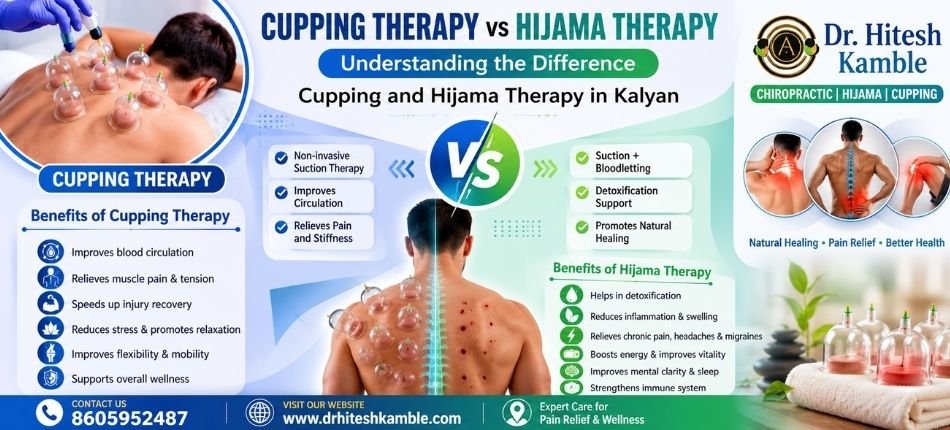
Cupping Therapy vs Hijama Therapy: Understanding the Difference | Cupping and Hijama Therapy in Kalyan – Dr. Hitesh Kamble
Introduction
Alternative healing therapies have gained significant popularity in recent years due to their natural approach to pain management, detoxification, and overall wellness. Among these therapies, Cupping Therapy and Hijama Therapy are widely recognized for their health benefits. While many people use these terms interchangeably, there are important differences between the two.
Understanding how these therapies work can help individuals choose the most suitable treatment for their specific health concerns.
What Is Cupping Therapy?
Cupping Therapy is an ancient healing practice that involves placing specially designed cups on the skin to create suction. This suction increases blood circulation, promotes healing, relieves muscle tension, and supports the body’s natural recovery process.
Cupping therapy has been used in traditional Chinese medicine, Middle Eastern medicine, and various holistic healthcare systems for centuries.
What Is Hijama Therapy?
Hijama Therapy, also known as Wet Cupping Therapy, is a specialized form of cupping that combines suction with controlled superficial skin incisions. After the cups create suction, small sterile incisions are made to remove a small quantity of blood.
Hijama is deeply rooted in traditional healing practices and is commonly used for detoxification, pain management, and overall wellness enhancement.
Key Differences Between Cupping Therapy and Hijama Therapy
Treatment Method
Dry cupping involves only suction using cups placed on the skin. Hijama therapy includes both suction and controlled bloodletting through small incisions.
Purpose
Cupping primarily focuses on improving circulation, reducing muscle tightness, and promoting relaxation. Hijama aims to support detoxification while also improving circulation and relieving pain.
Procedure
In dry cupping, cups are applied and removed after a specified period. In Hijama, cups are applied, small incisions are made, and a small amount of blood is extracted.
Recovery
Most individuals experience minimal downtime after both procedures, although Hijama may require slightly more aftercare due to the skin incisions.
Benefits of Cupping Therapy
Cupping Therapy is a natural healing technique that helps improve blood circulation, reduce muscle tension, and promote overall wellness. The suction created by the cups increases blood flow to the targeted area, which can help accelerate the body’s natural healing process. It is commonly used to relieve back pain, neck pain, shoulder stiffness, sports injuries, and muscle soreness. Cupping therapy may also help reduce stress, improve flexibility, and support relaxation by releasing tight muscles and improving tissue mobility. Many individuals choose cupping therapy as a non-invasive approach to pain management and recovery, making it a popular complementary treatment for maintaining physical health and well-being.
Benefits of Hijama Therapy
Hijama Therapy, also known as wet cupping therapy, offers a combination of improved circulation and detoxification benefits. The therapy involves creating suction on the skin followed by controlled superficial incisions that allow a small amount of blood to be removed. This process is believed to help eliminate toxins, reduce inflammation, and stimulate the body’s natural healing mechanisms. Hijama is often used to manage chronic pain, headaches, migraines, muscle stiffness, fatigue, and stress-related conditions. Many people report feeling more energized, refreshed, and relaxed after treatment. When performed by a trained professional, Hijama Therapy can be an effective holistic approach for improving overall health, supporting recovery, and enhancing physical and mental well-being.
Conditions That May Benefit from These Therapies
Musculoskeletal Pain
Many patients seek treatment for back pain, neck pain, shoulder pain, and joint discomfort.
Sports Injuries
Athletes often use these therapies to support recovery and improve performance.
Stress and Fatigue
Both therapies may help promote relaxation and reduce stress-related symptoms.
Chronic Health Conditions
Some individuals use these therapies as complementary approaches for long-term wellness management.
Safety and Professional Care
Both Cupping and Hijama Therapy should be performed by trained professionals using proper hygiene and sterilization protocols. Professional assessment ensures that the treatment is safe and appropriate for the individual’s condition.
Why Choose Dr. Hitesh Kamble for Cupping and Hijama Therapy in Kalyan?
Dr. Hitesh Kamble provides personalized treatment plans tailored to each patient’s needs. Using safe techniques and a holistic approach, he helps patients achieve pain relief, improved mobility, and enhanced wellness through professional cupping and Hijama therapies.
Conclusion
While Cupping Therapy and Hijama Therapy share common principles, they differ in technique and purpose. Understanding these differences allows individuals to make informed decisions about their health. Consulting an experienced practitioner ensures safe and effective treatment outcomes.
Cupping and Hijama Therapy in Kalyan Cupping and Hijama Therapy in Kalyan Cupping and Hijama Therapy in Kalyan Cupping and Hijama Therapy in Kalyan Cupping and Hijama Therapy in Kalyan Cupping and Hijama Therapy in Kalyan Cupping and Hijama Therapy in Kalyan Cupping and Hijama Therapy in Kalyan
