
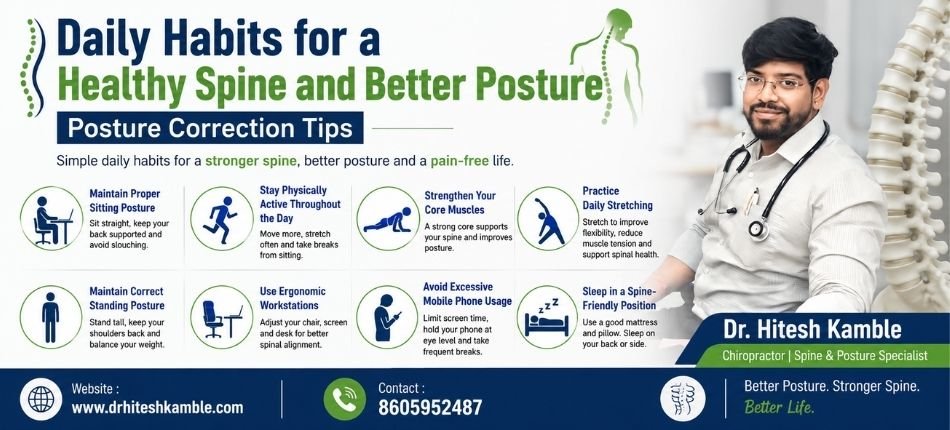
Daily Habits for a Healthy Spine and Better Posture | Posture Correction Tips – Dr. Hitesh Kamble
Introduction
A healthy spine is the foundation of a strong, active, and pain-free life. However, modern lifestyles involving prolonged sitting, excessive screen time, poor ergonomics, and lack of physical activity often lead to poor posture and spinal problems. Ignoring these issues can result in chronic neck pain, back pain, stiffness, and reduced mobility.
Learn the best daily habits for a healthy spine and better posture. Discover expert posture correction tips and chiropractic care solutions from Dr. Hitesh Kamble.
Why Is Maintaining a Healthy Spine Important?
The spine plays a crucial role in supporting your body, protecting the nervous system, and facilitating movement. Poor spinal health can affect your overall well-being by causing discomfort, fatigue, reduced flexibility, and even nerve-related issues.
Maintaining proper spinal alignment improves balance, enhances mobility, supports better breathing, and promotes overall physical health.
Maintain Proper Sitting Posture
Maintaining proper sitting posture is essential for protecting your spine and preventing unnecessary strain on your muscles and joints. Whether you work at a desk or spend long hours studying, sitting with your back straight, shoulders relaxed, and feet flat on the floor helps keep your spine aligned. Avoid slouching or leaning forward, as these habits can contribute to neck pain, back pain, and poor posture over time. Using a chair with adequate lumbar support can further enhance spinal comfort and health.
Stay Physically Active Throughout the Day
Regular physical activity is one of the most effective ways to maintain a healthy spine and good posture. Prolonged sitting can cause muscle stiffness and weaken the muscles that support your spine. Incorporating activities such as walking, stretching, cycling, or light exercises throughout the day helps improve blood circulation, maintain flexibility, and strengthen supporting muscles. Even taking short breaks to move around every hour can significantly reduce the risk of posture-related problems.
Strengthen Your Core Muscles
Core muscles, including the abdominal, back, and pelvic muscles, play a crucial role in supporting the spine. A strong core helps maintain proper posture, improves balance, and reduces the likelihood of back injuries. Exercises such as planks, bridges, and abdominal strengthening workouts can enhance spinal stability and reduce pressure on the lower back. Consistently strengthening your core can lead to better posture and improved overall physical performance.
Practice Daily Stretching
Daily stretching helps keep muscles flexible, reduces tension, and supports healthy spinal alignment. Tight muscles in the neck, shoulders, hips, and lower back can pull the body out of proper alignment, contributing to poor posture and discomfort. Simple stretching exercises performed regularly can improve mobility, increase flexibility, and relieve stiffness caused by prolonged sitting or repetitive activities. Stretching also promotes better circulation and helps prevent muscle imbalances that affect posture.
Maintain Correct Standing Posture
Standing with proper posture is just as important as sitting correctly. Good standing posture involves keeping your head aligned with your spine, shoulders back, chest open, and weight evenly distributed between both feet. Avoid leaning to one side or locking your knees, as these habits can place excessive stress on your spine and joints. Maintaining correct standing posture reduces muscle fatigue, improves balance, and helps prevent chronic neck and back pain.
Use Ergonomic Workstations
An ergonomically designed workstation can significantly reduce the strain placed on your spine during work or study sessions. Position your computer screen at eye level, keep your keyboard and mouse within comfortable reach, and ensure your chair provides adequate lower back support. Proper workstation setup encourages a neutral body position, reducing the risk of neck strain, shoulder tension, and lower back discomfort. Investing in ergonomic furniture and accessories can contribute to long-term spinal health.
Avoid Excessive Mobile Phone Usage
Excessive mobile phone usage often leads to a condition commonly known as “text neck,” which occurs when the head is constantly tilted forward while looking at a screen. This posture places additional pressure on the neck and upper spine, leading to pain, stiffness, and poor posture. To minimize these effects, hold your phone at eye level, take frequent breaks, and perform neck stretching exercises regularly. Being mindful of your posture while using mobile devices can help protect your spine from unnecessary strain.
Sleep in a Spine-Friendly Position
The way you sleep can have a significant impact on your spinal health. Sleeping in a spine-friendly position helps maintain the natural curves of the spine and reduces stress on muscles and joints. Sleeping on your back or side is generally recommended, as these positions support proper spinal alignment. Using a supportive mattress and a pillow that keeps your neck in a neutral position can further improve sleep quality and spinal comfort. Avoid sleeping on your stomach, as it can place excessive strain on the neck and lower back.
Stay Hydrated and Maintain Healthy Nutrition
Spinal discs require adequate hydration to function properly. Drinking sufficient water throughout the day helps maintain disc health and flexibility.
Additionally, consuming calcium-rich foods, vitamin D, and anti-inflammatory nutrients supports bone strength and overall spinal wellness.
Manage Stress Effectively
Stress often causes muscle tension in the neck, shoulders, and back, leading to poor posture and discomfort.
Stress management techniques such as:
- Deep breathing exercises
- Meditation
- Yoga
- Regular physical activity
can help relax muscles and improve posture naturally.
How Chiropractic Care Helps Improve Posture
Chiropractic care focuses on correcting spinal misalignments that contribute to poor posture and pain. Through gentle spinal adjustments and personalized treatment plans, chiropractic care helps:
- Improve spinal alignment
- Enhance posture
- Reduce back and neck pain
- Increase mobility and flexibility
- Prevent future spinal issues
Regular chiropractic assessments can identify posture problems early and provide effective solutions.
Why Choose Dr. Hitesh Kamble?
Dr. Hitesh Kamble specializes in chiropractic care and posture correction treatments designed to improve spinal health naturally. With a patient-focused approach, personalized care plans, and advanced chiropractic techniques, he helps patients achieve long-term relief from posture-related issues and maintain a healthier lifestyle.
Conclusion
Developing healthy daily habits is one of the most effective ways to protect your spine and improve posture. Simple lifestyle changes such as maintaining proper posture, staying active, exercising regularly, and seeking professional chiropractic care can significantly enhance your spinal health.
If you are experiencing posture problems, neck pain, or back discomfort, consult Dr. Hitesh Kamble for expert guidance and effective posture correction solutions.
Posture Correction Tips Posture Correction Tips Posture Correction Tips Posture Correction Tips Posture Correction Tips Posture Correction Tips Posture Correction Tips Posture Correction Tips Posture Correction Tips
