
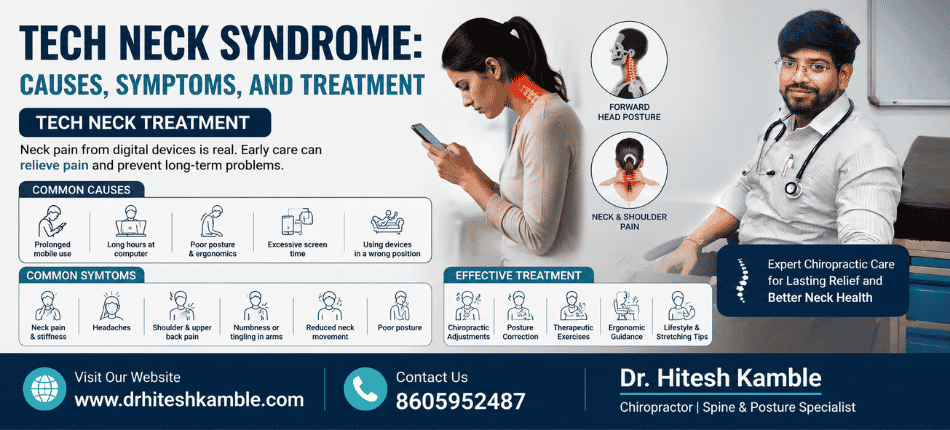
Tech Neck Syndrome: Causes, Symptoms, and Treatment | Tech Neck Treatment – Dr. Hitesh Kamble
In today’s digital world, smartphones, laptops, and tablets have become an essential part of daily life. Whether you’re working from home, attending online classes, or scrolling through social media, spending long hours looking down at screens can put excessive strain on your neck. This condition, commonly known as Tech Neck Syndrome, is becoming increasingly common among teenagers, working professionals, and even children.
Without proper treatment, Tech Neck can lead to chronic pain, poor posture, reduced mobility, and long-term spinal problems. Fortunately, early diagnosis and appropriate Tech Neck Treatment can relieve symptoms and restore healthy posture.
What is Tech Neck Syndrome?
Tech Neck Syndrome is a repetitive strain injury caused by prolonged forward bending of the neck while using electronic devices. The human head weighs approximately 4–6 kg when held upright. However, tilting the head forward significantly increases the pressure on the cervical spine, forcing the neck muscles, ligaments, and joints to work much harder. Over time, this constant stress can result in muscle fatigue, joint stiffness, inflammation, and spinal misalignment.
Common Causes of Tech Neck
Modern lifestyles contribute significantly to the development of Tech Neck Syndrome. Frequent use of smartphones, laptops, tablets, desktop computers, and gaming devices encourages poor posture for extended periods. Working without proper ergonomic support, reading while looking down, prolonged screen time without breaks, and inadequate physical activity further increase the risk. Over time, these habits place continuous stress on the cervical spine, leading to persistent neck discomfort and reduced mobility.
Symptoms of Tech Neck Syndrome
The symptoms of Tech Neck often develop gradually and may worsen if left untreated. Common signs include persistent neck pain, stiffness, upper back discomfort, shoulder pain, headaches originating from the neck, muscle tightness, reduced neck movement, numbness or tingling in the arms, and poor posture with rounded shoulders. Some individuals may also experience fatigue, difficulty concentrating, or pain while turning the head during routine activities.
How Poor Posture Affects the Spine
Poor posture places excessive mechanical stress on the cervical spine and surrounding muscles. As the head moves forward, the natural curve of the neck begins to flatten, causing muscle imbalance and increased pressure on spinal discs and joints. Over time, this may contribute to chronic neck pain, cervical disc degeneration, nerve irritation, and restricted movement. Correcting posture early helps prevent these long-term complications.
Risk Factors for Tech Neck
Anyone who spends several hours using digital devices can develop Tech Neck Syndrome. Office employees, students, IT professionals, gamers, designers, content creators, and individuals working remotely are particularly at risk. Poor workstation ergonomics, lack of exercise, weak neck muscles, obesity, and prolonged sitting further increase the likelihood of developing this condition.
Diagnosis of Tech Neck Syndrome
Diagnosis begins with a detailed medical history and physical examination. A healthcare professional evaluates posture, neck mobility, muscle tightness, spinal alignment, and pain patterns. If symptoms suggest nerve involvement or structural problems, imaging studies such as X-rays or MRI scans may be recommended. An accurate diagnosis helps determine the severity of the condition and guides an effective treatment plan.
Effective Tech Neck Treatment
Treatment focuses on relieving pain, correcting posture, and restoring normal spinal function. Chiropractic care helps improve spinal alignment and reduce pressure on the cervical joints, while physiotherapy strengthens weakened muscles and improves flexibility. Manual therapy, posture correction exercises, ergonomic modifications, stretching routines, and lifestyle changes all play an important role in recovery. In some cases, pain-relieving medications or supportive therapies may also be recommended depending on symptom severity.
Exercises for Neck Pain Relief
Gentle exercises help reduce stiffness and improve neck strength. Chin tucks, shoulder blade squeezes, neck stretches, upper trapezius stretches, chest-opening exercises, and cervical range-of-motion exercises can relieve muscle tension and restore flexibility. These exercises should be performed under professional guidance to ensure proper technique and avoid worsening the condition.
Tips to Prevent Tech Neck
Preventing Tech Neck begins with maintaining proper posture while using electronic devices. Keep your screen at eye level, avoid looking down at your phone for extended periods, take short breaks every 30–40 minutes, and perform regular stretching exercises throughout the day. Using ergonomic chairs, maintaining correct sitting posture, strengthening neck and upper back muscles, and limiting unnecessary screen time can significantly reduce the risk of developing Tech Neck Syndrome.
When Should You See a Chiropractor?
If neck pain persists for several weeks, interferes with daily activities, causes headaches, numbness, tingling, or reduced neck movement, it is important to seek professional evaluation. Early chiropractic intervention can prevent further spinal stress, relieve discomfort, and restore healthy movement before the condition becomes chronic.
Why Choose Dr. Hitesh Kamble?
Dr. Hitesh Kamble provides expert chiropractic care for neck pain, posture correction, spinal alignment, sports injuries, and musculoskeletal disorders. Using a personalized treatment approach that combines chiropractic adjustments, posture correction, rehabilitation exercises, and patient education, he helps patients achieve long-term pain relief and improved spinal health without unnecessary surgery.
Conclusion
Tech Neck Syndrome is a growing health concern caused by prolonged use of digital devices and poor posture. Early recognition of symptoms, timely Tech Neck Treatment, posture correction, and regular exercise can prevent long-term spinal complications. If you experience persistent neck pain or posture-related discomfort, consult Dr. Hitesh Kamble for comprehensive evaluation and effective chiropractic care.
Tech Neck Treatment Tech Neck Treatment Tech Neck Treatment Tech Neck Treatment Tech Neck Treatment Tech Neck Treatment Tech Neck Treatment Tech Neck Treatment Tech Neck Treatment Tech Neck Treatment
